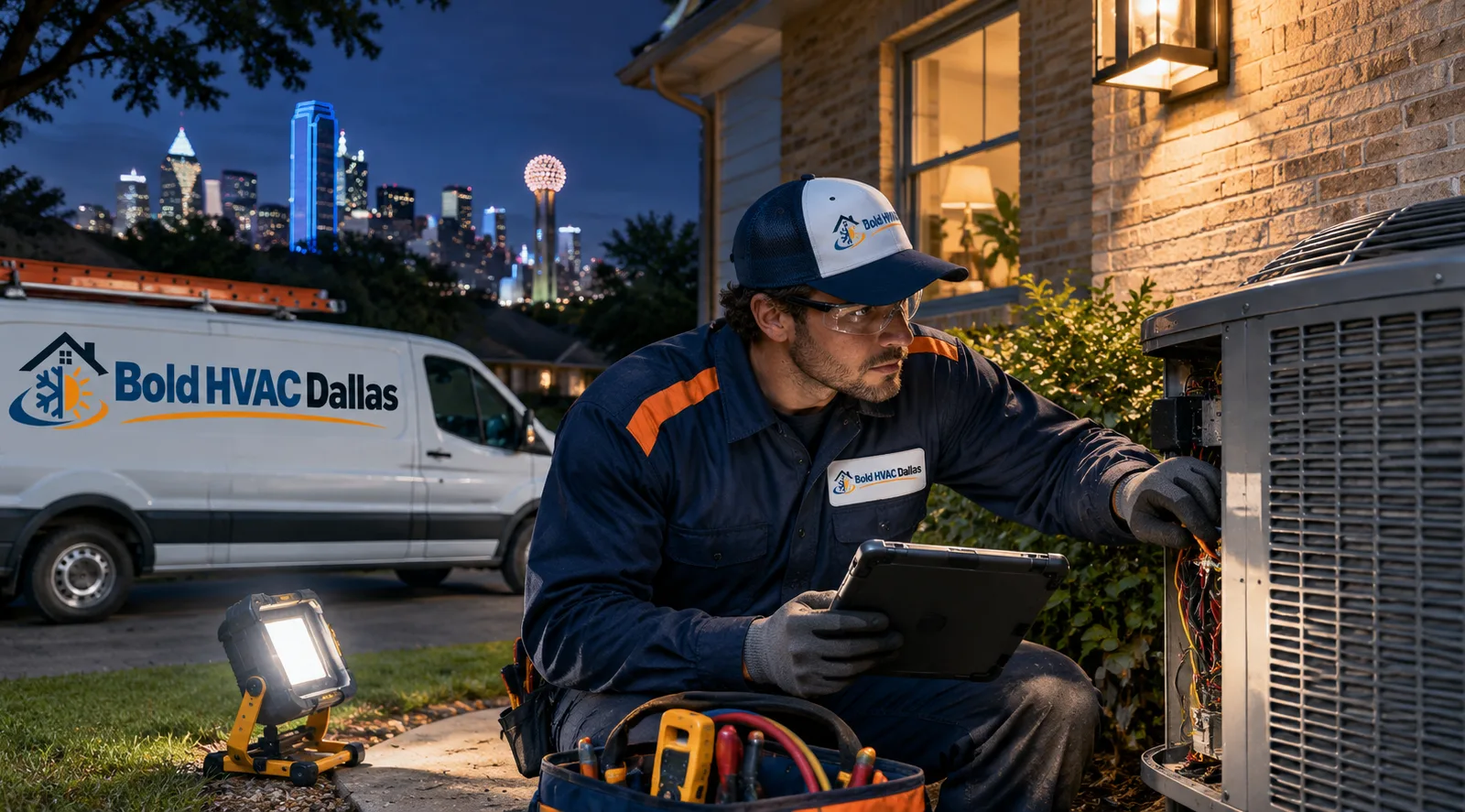
The technician begins by confirming what the system is doing now and what happened before it failed. That history matters. A unit that stopped after a storm may require different checks than one that gradually lost cooling, froze at the indoor coil, or began shutting down every few minutes.
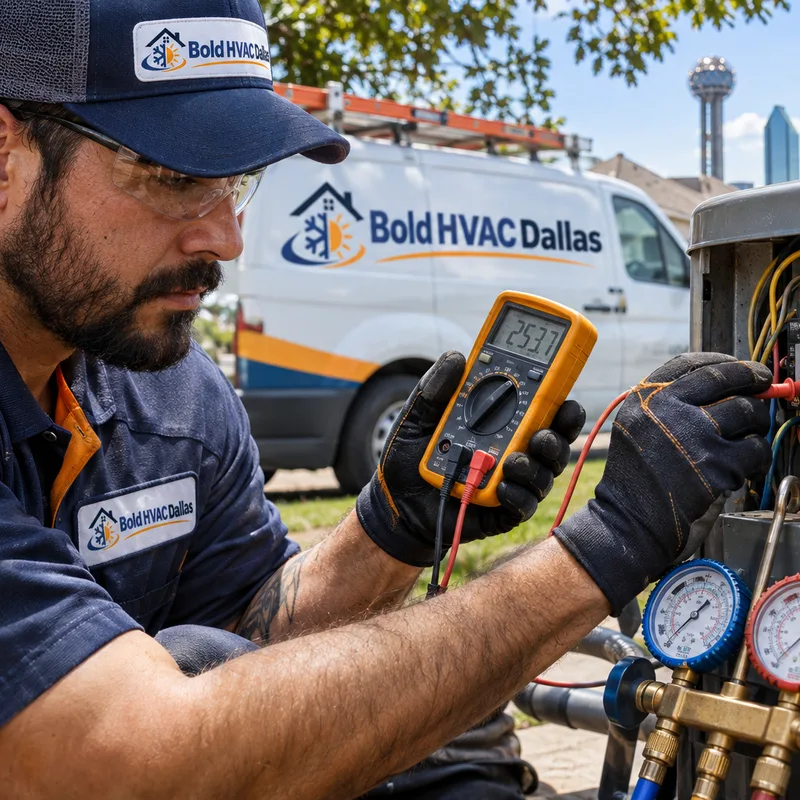
Diagnosis typically includes the thermostat signal, supply voltage, low-voltage controls, temperature split, airflow, filters, blower operation, capacitors, motors, contactors, safeties, and visible coil condition. Refrigerant pressures and temperatures may be measured when the symptoms point to the sealed system. Gas heating equipment calls for checks of ignition, combustion-related controls, venting, and safety circuits.
Once the fault is identified, you receive an explanation of the failed component, the proposed repair, and any concern that could affect the decision. If a permanent repair cannot be completed during the initial visit because a specific part is unavailable, the technician can explain whether a safe temporary measure exists and what must happen next. Equipment is not returned to service when doing so would create an electrical, combustion, refrigerant, or water hazard.