HVAC service in Dallas, Texas

City of Dallas HVAC Services

Practical repairs, properly sized replacements, and preventive maintenance for dependable comfort through hot summers and sudden cold snaps.

✓Measured system diagnosis ✓Repair and replacement options ✓Preventive maintenance
HVAC technician inspecting an outdoor air-conditioning condenser at a Dallas home on a clear summer day

Complete City of Dallas HVAC Care

City of Dallas HVAC work needs to account for long cooling seasons, high summer temperatures, humidity control, and rapid weather changes. Bold HVAC Dallas services central air conditioners, heat pumps, furnaces, air handlers, thermostats, and related comfort equipment for homes in Dallas, TX.

Our HVAC service crew in Dallas starts by listening to what has changed, checking the equipment, and testing the system rather than replacing parts based on symptoms alone. A proper diagnostic visit may include temperature split measurements, static-pressure testing, electrical readings, refrigerant-circuit checks, thermostat verification, and inspection of filters, drains, coils, and accessible duct connections. You receive an explanation of the findings and a recommended scope before work begins.

Service is available for equipment breakdowns, recurring performance issues, planned replacements, and routine maintenance. The goal is straightforward: identify the fault, explain the practical options, and complete work that fits the equipment and the home.


Complete system support

Repair, Installation, and Maintenance Options

Air-Conditioning Repair

Diagnosis and repair for warm airflow, short cycling, frozen evaporator coils, tripped breakers, unusual sounds, water near the air handler, and systems that will not start. Testing helps distinguish a failed component from an airflow or control problem.

Heating Repair

Service for furnaces and heat pumps that produce little heat, cycle incorrectly, make new noises, or stop responding to the thermostat. Combustion-related concerns require prompt attention and should never be treated as a do-it-yourself repair.

System Installation

Replacement planning considers a Manual J load calculation, equipment capacity, efficiency ratings, duct condition, electrical requirements, drainage, and control compatibility. Correct sizing matters because an oversized unit can cycle too quickly and provide poor humidity control.

Preventive Maintenance

Seasonal service includes cleaning and inspection appropriate to the equipment, along with checks of electrical connections, capacitors, refrigerant performance, condensate drainage, filters, blower operation, safety controls, and thermostat settings.

Airflow and Comfort Troubleshooting

Hot rooms, weak registers, excessive noise, and uneven temperatures may point to restrictions, duct leakage, return-air limitations, blower settings, or equipment sizing. The full air path needs to be evaluated before recommending a correction.

Thermostats and Controls

Control service covers faulty thermostats, wiring problems, incorrect staging, and compatibility concerns when installing programmable or smart controls. The thermostat must match the HVAC equipment and its operating stages.

Local system demands

Dallas Conditions Put Cooling Systems to Work

Dallas summers place sustained demand on air-conditioning equipment. Dirty outdoor coils, restricted filters, weak capacitors, drainage problems, and low airflow can become more noticeable during extended hot weather. Maintenance before peak demand gives a technician time to find worn or dirty components before the system is working its hardest.

Housing type also changes the approach. Older homes in areas such as Oak Cliff may have additions, altered ductwork, or limited return-air pathways that require close inspection. Lakewood includes older houses where equipment replacements may need to work with existing framing and duct routes. Uptown has many multifamily buildings, so access, equipment location, building rules, and responsibility for shared components should be confirmed before work is scheduled. In Preston Hollow, larger floor plans and multiple-system layouts can require room-by-room load and airflow review rather than one whole-house assumption.

Dallas residents should also consider utility requirements when replacing major equipment. Oncor is the electric delivery utility for much of Dallas, while residents choose among retail electricity providers. Available efficiency incentives and eligibility rules can change, so current program terms should be verified before equipment is purchased.

Technician measuring supply-air temperature at an indoor register in a Dallas residence with diagnostic instruments visible
Measured temperatures and airflow help separate equipment faults from duct and distribution problems.
From symptoms to verification

How HVAC Service Works

Check Availability
01

Describe the symptoms

Share when the problem began, whether it is constant or intermittent, which rooms are affected, and any recent thermostat, filter, electrical, or renovation changes. These details help direct the initial testing.

02

Inspect and test the system

The technician checks the equipment and relevant supporting components. Testing may include voltage and amperage, capacitors, temperature readings, static pressure, condensate drainage, control signals, and refrigerant performance where appropriate.

03

Review the findings

You receive a plain explanation of the confirmed issue, contributing conditions, repair choices, and any limitations caused by equipment age, part availability, duct condition, or access. The scope should be clear before authorized work starts.

04

Complete and verify the work

After repair or installation, the system is operated and checked. Verification may include temperature change, thermostat response, airflow, electrical readings, drainage, safety controls, and proper cycling.

05

Plan ongoing care

Maintenance timing, filter needs, and warning signs are discussed based on the installed equipment and household conditions. Records of completed work can make future troubleshooting faster.

Evidence-based planning

Repair or Replace? Base the Decision on Evidence

A repair can be sensible when the fault is isolated, the equipment is otherwise in serviceable condition, and the expected work is proportionate to the system's remaining life. Replacement deserves consideration when failures repeat, a major component has failed, refrigerant or parts are difficult to obtain, comfort remains poor, or the existing unit is incorrectly sized.

Age alone does not settle the question. The decision should also consider repair history, coil and heat-exchanger condition, efficiency, duct performance, refrigerant type, electrical requirements, and whether the current system can maintain reasonable temperature and humidity. If replacement is recommended, ask how capacity was calculated and whether duct, return-air, drainage, thermostat, and electrical changes are part of the written scope.

Equipment efficiency is expressed through ratings such as SEER2 for cooling and HSPF2 for heat pumps. Gas furnace efficiency is stated as AFUE. Higher ratings can reduce energy use under comparable conditions, but installation quality, sizing, controls, and duct performance still affect real operation.

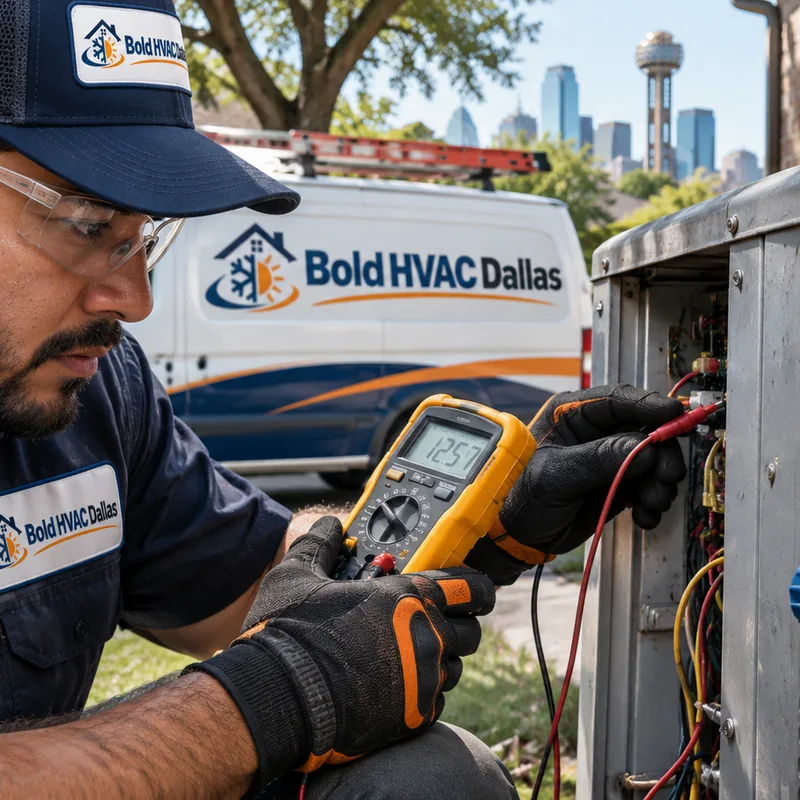
HVAC technician using a digital multimeter and gauges to diagnose residential cooling equipment safely
Objective readings support a repair or replacement recommendation.
Preventive system care

Maintenance That Addresses the Whole System

A quick visual check is not a complete tune-up. Useful maintenance examines how the system starts, runs, drains, and responds to controls. Depending on equipment type and condition, service can include inspecting and cleaning coils, checking the blower assembly, testing capacitors and contactors, measuring temperature change, clearing accessible condensate lines, checking refrigerant performance, confirming heat-pump defrost operation, and testing furnace safety controls.

Filters need special attention because the correct replacement depends on cabinet size, system design, household conditions, and filter resistance. A denser filter is not automatically better if the blower and return-air system cannot handle the added pressure drop. Pets, renovation dust, and longer operating hours may justify more frequent inspection.

Cooling equipment is best checked before heavy summer use, while heating equipment should be evaluated before cold weather. If a system trips a breaker repeatedly, produces a burning odor, shows signs of combustion trouble, or leaks water near electrical components, turn it off and arrange professional diagnosis rather than repeatedly restarting it.

Check Availability

Get a diagnosis based on measured system performance, along with a clear scope for repair, replacement, or maintenance before work begins.

Call to Schedule
Helpful answers

Questions About City of Dallas HVAC Service

How much does HVAC repair cost in Dallas?+

The final price depends on the failed component, diagnostic time, equipment access, part availability, and whether another condition caused the failure. A thermostat or electrical control issue has a different scope than a compressor, coil, blower motor, or refrigerant-circuit repair. Dallas homes with attic equipment or restricted mechanical access may require additional labor. A firm price should follow on-site testing.

How quickly can an HVAC problem be diagnosed?+

Many common faults can be identified during one service visit, but intermittent problems, refrigerant leaks, complex control issues, and inaccessible equipment may require additional testing. Providing the model number, recent repair history, and a description of when the symptom occurs can help. Availability also changes during periods of extreme Dallas heat, when service demand rises.

Should I repair or replace an older air conditioner?+

Repair is usually worth considering when the fault is isolated and the system remains in sound overall condition; replacement becomes more reasonable when failures recur or a major repair is needed. The decision should include equipment condition, refrigerant type, efficiency, sizing, duct performance, and parts availability. A replacement proposal should state how the new capacity was selected.

Do I need a permit for HVAC replacement in Dallas?+

Many HVAC replacements and related mechanical, electrical, or gas changes require permits and inspections under City of Dallas rules. The exact requirement depends on the scope and property. Confirm permit responsibility in the written proposal, and make sure required inspections are included rather than assumed.

How often should HVAC maintenance be scheduled in Dallas?+

Cooling and heating equipment should generally be inspected before its main operating season, with frequency adjusted for equipment type, usage, pets, dust, and manufacturer requirements. Dallas cooling systems often run for extended periods in summer, so coil condition, filters, drainage, capacitors, and airflow deserve regular attention. Heat pumps need both cooling and heating functions checked.

Why is my upstairs warmer than the rest of the house?+

An upstairs temperature difference can result from solar heat gain, duct leakage, inadequate return air, insulation gaps, airflow imbalance, thermostat location, or equipment capacity. Closing registers at random can raise static pressure and worsen performance. A technician should measure temperatures and airflow, inspect accessible ducts, and assess the building load before recommending zoning or equipment changes.

Can a smart thermostat work with my existing HVAC system?+

Compatibility depends on the equipment type, number of heating and cooling stages, wiring, control voltage, and whether a common wire is available. Heat pumps, dual-fuel systems, and communicating equipment require particular attention. The control should be matched and configured correctly so that auxiliary heat, staging, and compressor protection operate as intended.

Plan the next step

Ready to Restore Reliable Home Comfort?

Tell Bold HVAC Dallas what your system is doing and when the problem started. We will help you plan the right next step, whether that means diagnosis, maintenance, or a properly scoped replacement.