Restore Proper Airflow
Filter condition, blower operation, coil cleanliness, and blocked grilles all affect airflow. Correcting serviceable restrictions can help rooms reach the thermostat setting more consistently.
Serving Dallas, Texas & surrounding areas
24/7 Emergency Response
Seasonal maintenance that prepares your heating and cooling equipment for demanding weather, identifies developing problems, and keeps comfort more consistent.
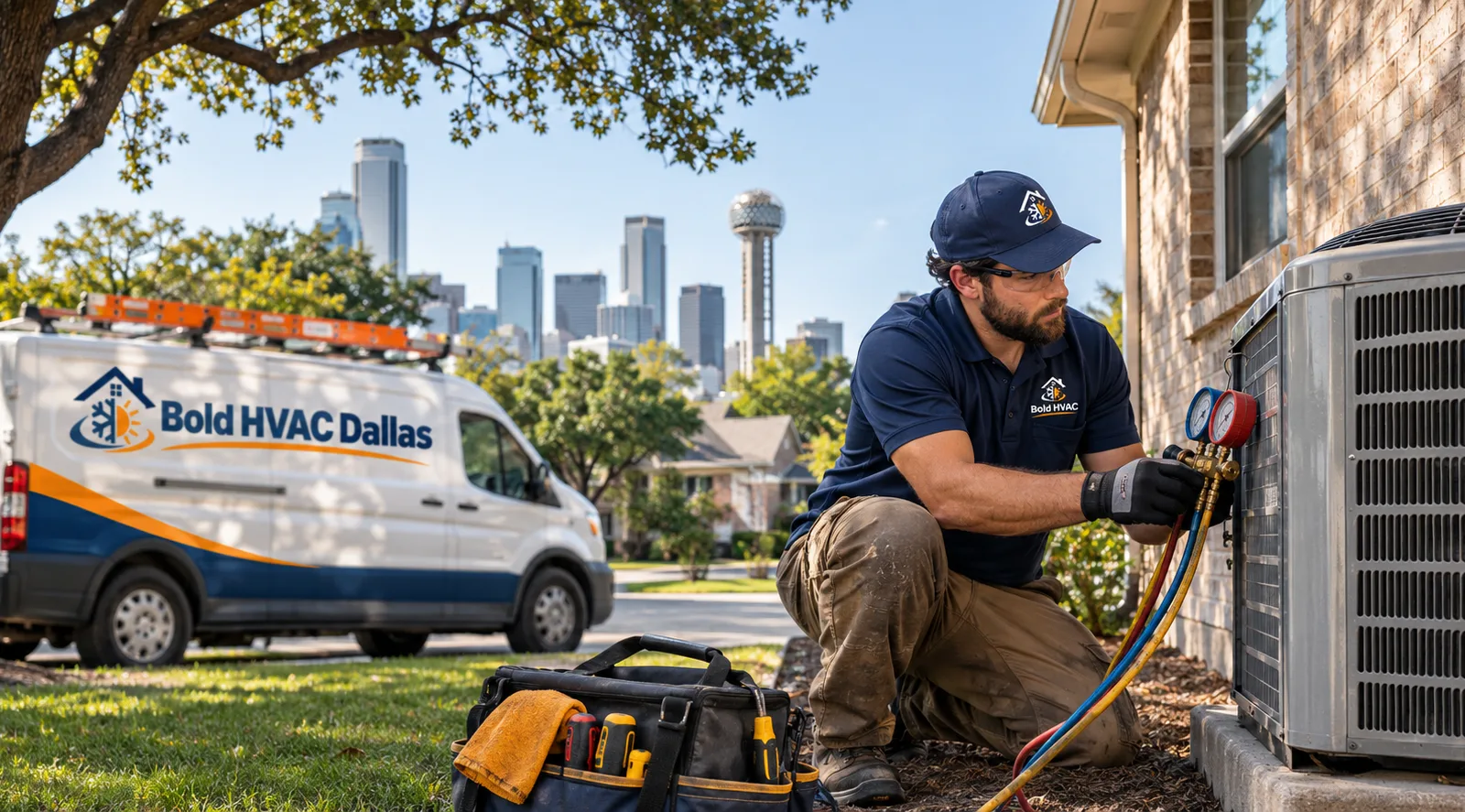
An HVAC tune-up in Dallas gives your equipment a thorough operational check before sustained summer heat or a winter cold spell puts it under heavier demand. Bold HVAC Dallas inspects accessible components, checks system operation, cleans serviceable areas, and looks for wear that may lead to poor comfort or an unexpected shutdown.
Dallas weather makes timing matter. Long stretches of hot weather keep air conditioners running for extended periods, while abrupt temperature changes can bring heating equipment into use with little warning. Cottonwood, dust, grass clippings, and other outdoor debris can also restrict airflow through a condenser coil. Indoor airflow may suffer when a filter is loaded, return grilles are obstructed, or the blower assembly needs attention.
Our HVAC service experts across the Dallas area approach each tune-up as an equipment-specific inspection rather than a quick visual check. The goal is to document how the system is operating now, complete appropriate maintenance, and explain any issue that deserves attention.
A useful tune-up examines the parts that affect operation, airflow, temperature control, and safety. For cooling equipment, that generally includes inspecting the condenser and evaporator areas where accessible, checking the contactor and capacitors, examining electrical connections, measuring temperature change across the indoor coil, and evaluating refrigerant operation using manufacturer specifications. Refrigerant should not be added automatically. An abnormal reading calls for diagnosis because a sealed system does not consume refrigerant during normal operation.
Heating maintenance depends on the equipment. A gas furnace check includes the burner area, ignition sequence, flame sensor, venting, safety controls, and signs of combustion trouble. Heat pump service includes reversing-valve operation, defrost-related components, auxiliary heat, and performance in both operating modes when conditions permit.
The technician should also inspect the thermostat, accessible drain components, filter, blower operation, disconnects, wiring, and equipment condition. Measurements matter because a weak capacitor, excessive temperature rise, or abnormal motor amperage may reveal a problem before the system stops working.
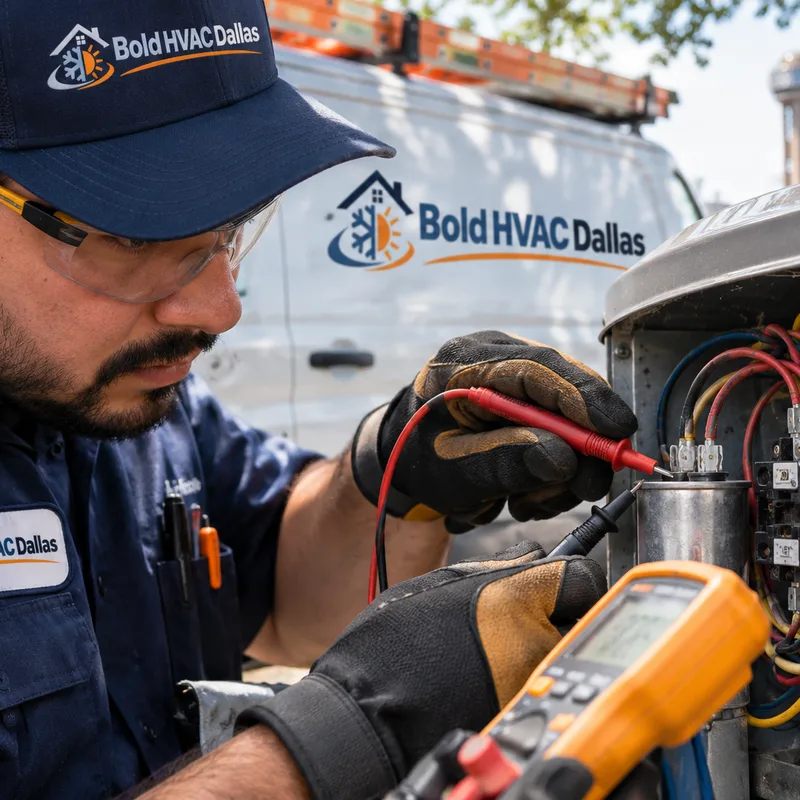
Filter condition, blower operation, coil cleanliness, and blocked grilles all affect airflow. Correcting serviceable restrictions can help rooms reach the thermostat setting more consistently.
Electrical testing and an operating inspection can uncover loose connections, pitted contactors, weakening capacitors, drain problems, and unusual motor behavior before a peak-weather failure.
Cleaning appropriate components and checking operating conditions can reduce avoidable strain. Maintenance recommendations should follow the equipment type and manufacturer guidance.
Heating equipment requires checks suited to its fuel and design. Ignition, limit controls, venting, electrical protection, and other accessible safety items are reviewed as applicable.
The visit starts with symptoms and recent performance. Uneven temperatures, long cycles, unusual sounds, odors, water near the indoor unit, or rising runtime can direct the inspection.
The technician examines accessible indoor and outdoor equipment, completes appropriate cleaning and adjustments, checks the thermostat and filter, and inspects electrical and drainage components.
The system is operated in the relevant mode. Readings may include temperature change, amperage, voltage, capacitor performance, static pressure, refrigerant data, or furnace temperature rise as appropriate.
You receive a plain explanation of completed maintenance and observed conditions. If repair is recommended, the reason and urgency should be clear before additional work is authorized.
Equipment access and system design vary across Dallas. Older homes in areas such as Oak Cliff and East Dallas may have retrofitted ductwork, tight equipment spaces, or additions served by an original system. A tune-up should account for those conditions rather than treating the outdoor unit as the entire system.
Properties in newer North Dallas developments may use higher-efficiency, variable-speed, communicating, or zoned equipment. These systems can require model-specific diagnostics and control checks. Townhomes and condominiums in Uptown may place equipment in closets, attics, rooftops, or other constrained locations, so safe access can affect the time and work involved.
Regardless of neighborhood, outdoor clearance matters. Shrubs and debris should not obstruct condenser airflow, and the disconnect must remain accessible. Indoors, keep return grilles open and use a filter that matches the system's requirements. An overly restrictive filter can reduce airflow even when it looks clean.
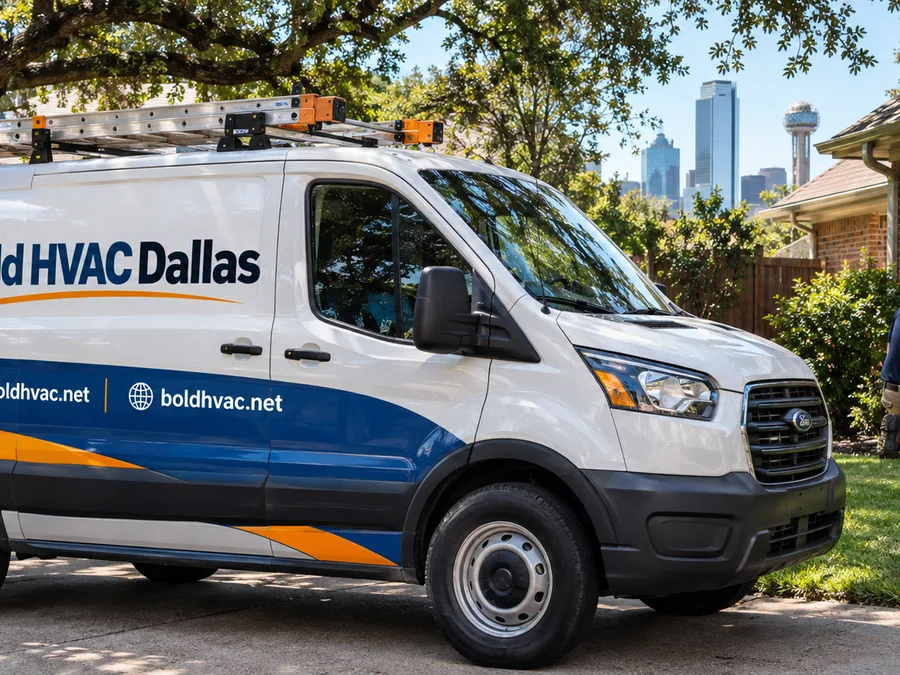
An HVAC tune-up in Dallas typically costs about $80 to $200 for one standard residential system, while multi-system homes, advanced controls, difficult access, or combined heating and cooling maintenance may cost more. Promotional pricing may cover a narrower checklist, so compare the actual scope rather than price alone.
Final cost depends on equipment type, system count, age, accessibility, maintenance condition, and whether diagnostic work is needed beyond routine service. Repairs, replacement filters, refrigerant leak testing, and parts are generally separate. The exact cost is confirmed before or during the service visit.
Cooling equipment is best checked before the period of heaviest air-conditioning use. Heating equipment should be inspected before regular winter operation. Scheduling in milder weather gives you time to consider any recommended work without the urgency of a system that has already failed.
Many households choose separate spring and fall visits because cooling and heating checks involve different components. A heat pump also benefits from seasonal attention because it operates in both summer and winter. Manufacturer instructions, equipment age, household conditions, and warranty terms may influence the right schedule.
Do not wait for routine maintenance if you smell gas, detect a burning odor, hear harsh mechanical noise, see ice on refrigerant lines, notice repeated breaker trips, or find active water leakage. Turn the equipment off when continued operation may be unsafe or damaging and arrange diagnostic service. A tune-up is preventive work; it is not a substitute for troubleshooting an active failure.
Schedule seasonal maintenance before extreme weather increases runtime and makes a small developing issue more likely to interrupt your comfort.
Call to ScheduleMost residential systems should receive professional maintenance at least once a year, while separate cooling and heating visits may be appropriate for systems with distinct seasonal equipment. Dallas air conditioners endure long cooling periods, and gas furnaces or heat pumps need checks relevant to winter operation. Follow the manufacturer's maintenance guidance and any warranty requirements for your model.
A routine visit for one accessible residential system commonly takes about one to two hours. The visit may take longer when a home has multiple systems, attic equipment, advanced zoning, heavy coil debris, drainage trouble, or symptoms that require diagnosis. Safe access in compact Uptown mechanical spaces or older-home attics can also affect service time.
Routine maintenance generally does not include replacement parts, major repairs, or refrigerant. The technician should explain abnormal findings and obtain approval before additional work. Low refrigerant indicates a charge or leak issue that requires proper diagnosis rather than automatic topping off.
Yes, older equipment can usually be maintained if it is safely operable and accessible. The technician may pay closer attention to electrical wear, motor condition, temperature rise, coil condition, and signs of refrigerant or combustion problems. Maintenance can document current operation, but it cannot reverse age-related deterioration or guarantee that an older component will not fail.
You may replace it if you know the correct size and type, but leaving the current filter in place can help the technician assess recent loading and airflow conditions. Keep a replacement available if you want it installed. Dallas dust and extended cooling runtime can load filters quickly, but the best interval depends on filter area, household activity, pets, and system design.
A tune-up may correct uneven comfort when the cause is a dirty filter, improper thermostat operation, limited airflow, or another serviceable maintenance issue. It will not fully correct undersized ductwork, inadequate insulation, solar heat gain, equipment sizing problems, or major air leakage. Operating measurements help determine whether further testing is justified.
A malfunctioning system usually needs diagnostic service rather than a standard tune-up. Tell the technician about weak airflow, warm air during cooling, short cycling, breaker trips, leaks, odors, or unusual sounds when scheduling. That allows the visit to be planned around troubleshooting instead of a routine maintenance checklist.
Tell Bold HVAC Dallas about your equipment, recent performance, and any comfort concerns. We will help arrange a maintenance visit with a clear scope for your heating and cooling system.