No Heat
We check thermostat commands, electrical supply, safety switches, ignition, fuel delivery, motors, and control boards to find where the heating sequence stops.
Serving Dallas, Texas & surrounding areas
24/7 Emergency Response
Get a careful diagnosis, a clear repair plan, and dependable heat when your furnace or heat pump stops working properly.
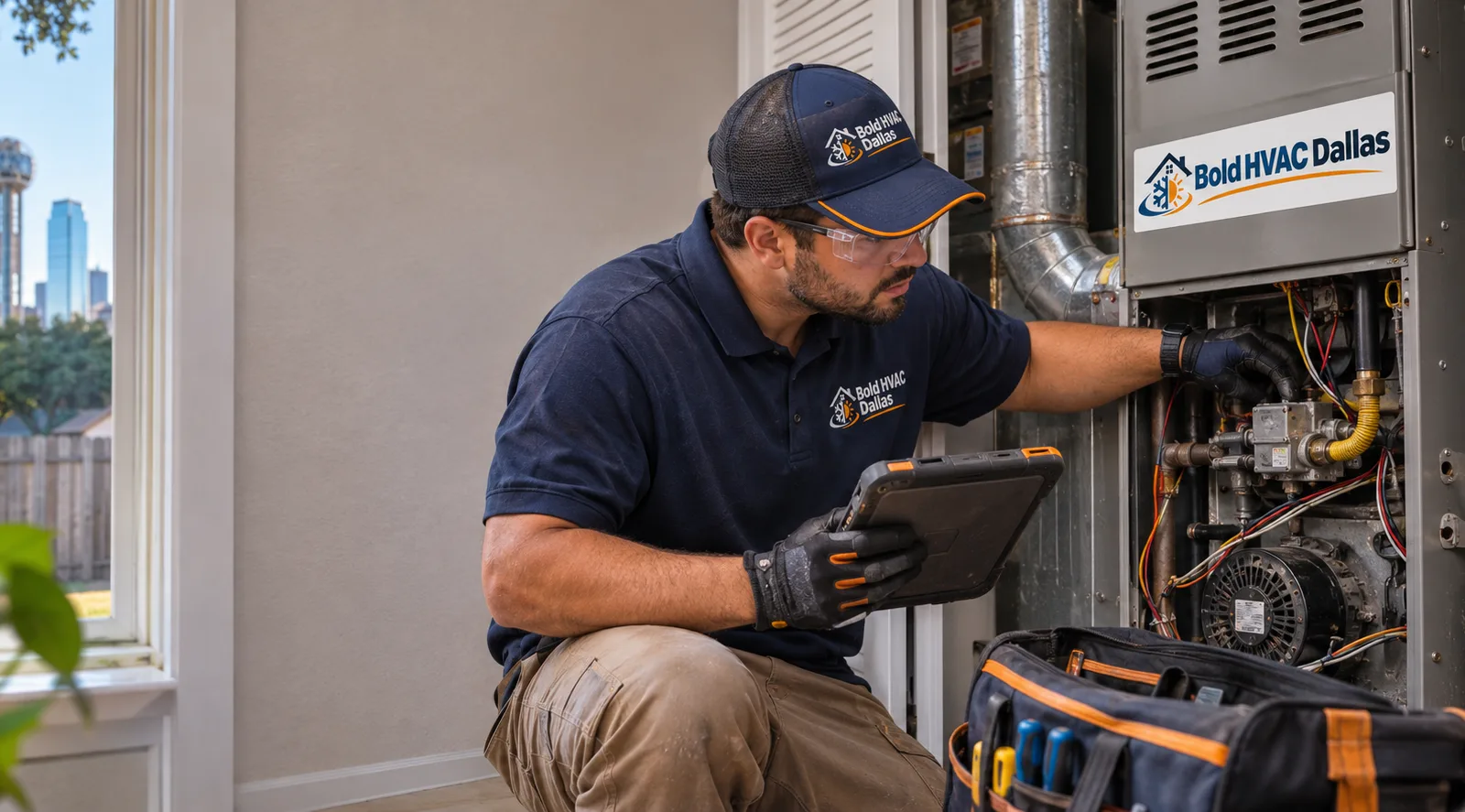
When the heat will not start, shuts off too soon, or sends cool air through the vents, you need more than a quick guess. Bold HVAC Dallas provides heating repair Dallas homeowners can use to identify the actual fault and make an informed repair decision. We troubleshoot furnaces, heat pumps, thermostats, controls, electrical components, and airflow problems.
Our work starts with the symptoms you have noticed. A technician then checks the equipment, confirms the failure, and explains which repair is appropriate before work moves forward. As an HVAC service company in Dallas, we approach heater problems as part of the complete comfort system, including the thermostat, indoor equipment, duct airflow, and outdoor heat pump components when applicable.
Dallas winters can move quickly between mild afternoons and cold nights. That temperature swing puts extra attention on reliable ignition, controls, and heat pump defrost operation after equipment has sat idle. Prompt service also matters because a small control or airflow problem can cause repeated shutdowns and added strain on other components.
A heater may fail completely, but many problems first appear as uneven temperatures, unusual sounds, frequent cycling, or unexpectedly long run times. A gas furnace that starts and stops may have a dirty flame sensor, a limit-switch issue, restricted airflow, or a control fault. A furnace that never ignites may have trouble with the igniter, gas valve, pressure switch, inducer motor, thermostat signal, or safety circuit.
Heat pumps use different components. Poor heating may come from a failed capacitor, contactor, reversing valve, defrost control, fan motor, refrigerant circuit, or auxiliary heat controls. Frost on the outdoor coil is not automatically a failure because heat pumps periodically enter defrost mode. Heavy ice that remains in place, however, calls for diagnosis.
Electrical burning odors, repeated breaker trips, visible sparking, or a strong gas smell require immediate caution. Turn the system off when it is safe to do so. Leave the building if you smell gas, avoid operating switches or flames, and contact the gas utility or emergency services from a safe location.
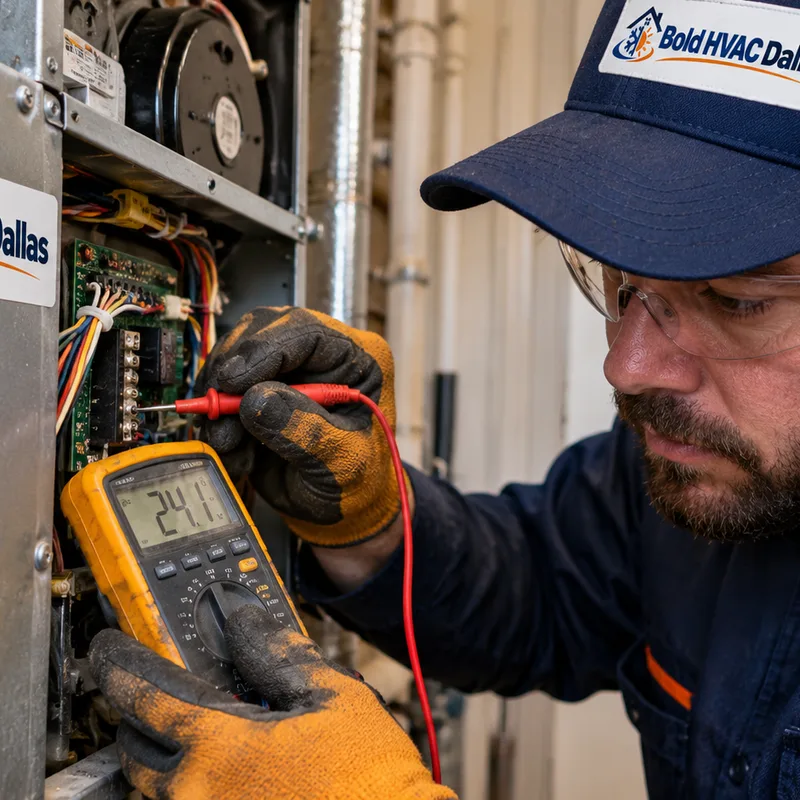
We check thermostat commands, electrical supply, safety switches, ignition, fuel delivery, motors, and control boards to find where the heating sequence stops.
Frequent starts and stops may point to restricted airflow, overheating, thermostat placement, flame-sensing trouble, or equipment controls.
Filter condition, blower operation, duct restrictions, heat pump output, auxiliary heat, and supply temperatures help isolate the cause.
Rattling, scraping, squealing, buzzing, and persistent burning smells can indicate loose parts, motor wear, electrical faults, or debris near a heat source.
Room-to-room differences may involve dampers, duct leakage, airflow balance, insulation, thermostat location, or a heater that is not producing enough heat.
We inspect thermostat settings, wiring, low-voltage signals, relays, sensors, zoning controls, and communication between system components.
Tell us what the heater is doing, when the problem began, and whether you have noticed odors, noises, error codes, breaker trips, or certain rooms staying cold.
The technician follows the heating sequence and measures relevant conditions. Depending on the equipment, that can include voltage, amperage, temperature rise, static pressure, flame signal, safety circuits, and heat pump operation.
You receive an explanation of the failed part or condition, the recommended repair, and any factors that affect the decision. If age or condition makes replacement worth discussing, repair and replacement remain separate choices.
After authorization, the technician completes the approved work and runs the heater through a full operating cycle. Final checks confirm startup, heat delivery, shutdown, and thermostat response.
Dallas has a mix of heating equipment and building types. Older homes in areas such as Oak Cliff may have altered ductwork or equipment added long after the original construction, so airflow and installation details deserve attention. Lakewood includes established homes where utility closets, crawl areas, and additions can affect access and air distribution. Uptown contains apartments and townhomes where compact mechanical spaces and shared-building rules may shape service access. In newer North Dallas homes, zoning controls and communicating thermostats may add another layer to troubleshooting.
Gas furnaces and electric heat pumps require different test methods. Furnace diagnosis follows the ignition sequence and safety circuit. Heat pump diagnosis must account for the refrigeration cycle, reversing valve, defrost controls, outdoor conditions, and auxiliary heat. A technician should test the system rather than replace parts based only on a symptom.
Heating and air conditioning share the blower, thermostat, duct system, and sometimes the same control board. That overlap is why heating and air conditioning repair in Dallas may require checking components used in both modes, even when the current complaint involves heat alone.
Heating repair in Dallas typically costs about $150 to $1,200, while major component or refrigerant-related work can cost more. A basic diagnostic visit or small electrical repair is usually at the lower end. Ignition parts, motors, control boards, gas valves, heat pump controls, and difficult access raise the price.
Equipment type, part availability, system age, labor, after-hours timing, and whether further testing is required all affect the final total. The exact cost is confirmed after the technician inspects the system and identifies the fault.
Repair is often reasonable when the fault is isolated, the equipment is otherwise in sound condition, and the needed part is available. A failed igniter, capacitor, relay, thermostat, or flame sensor does not automatically mean the entire system should be replaced.
Replacement deserves consideration when the heat exchanger is damaged, a major component has failed on aging equipment, refrigerant availability complicates a heat pump repair, or the system has recurring faults. Comfort problems that continue despite repairs may also point to sizing, duct, or installation issues rather than a single defective part.
The useful comparison includes the current repair cost, equipment condition, prior repair history, safety, comfort, and the likelihood of another major failure. Bold HVAC Dallas explains the findings so you can decide based on the condition of your system, not a blanket rule.
If your heater is unreliable, arrange a diagnosis before the next cold night puts more demand on the system.
Call to ScheduleMany heater repairs can be completed during one service visit when the fault is clear and the required part is available. Diagnostic time and completion time vary with the equipment, access, part availability, and whether the failure is intermittent. Compact mechanical closets in Dallas townhomes and apartments may also require additional access coordination.
A furnace may blow cool air because ignition failed, the burners shut down on a safety limit, airflow is restricted, or the thermostat fan setting is keeping the blower on. Dallas heater repair should include testing the ignition sequence, temperature rise, filter, blower, flame signal, and safety circuit rather than assuming the thermostat is at fault.
Yes, furnace and heat pump problems can both be diagnosed, but the tests and parts differ. Gas furnace service focuses on combustion, ignition, venting, flame sensing, and safety controls. Heat pump service may involve the reversing valve, defrost cycle, outdoor coil, refrigerant circuit, and auxiliary electric heat.
Turn the heater off if it produces electrical odors, scraping sounds, smoke, repeated breaker trips, or unsafe operation. If you smell gas, leave the property, avoid switches and open flames, and report the odor from a safe place. A system with a minor comfort issue may be left off until it can be inspected.
The equipment type, thermostat behavior, error code, recent noises, odors, breaker activity, filter condition, and timing of the failure all help narrow the initial checks. Photos of the equipment label or thermostat message can also help identify the system before the visit.
A heavily restricted filter can reduce airflow enough to overheat a furnace and trip its high-limit switch. It can also reduce heat pump airflow and comfort. Replacing the filter may remove the restriction, but repeated shutdowns still warrant testing because the blower, duct system, evaporator coil, or controls may have another fault.
Compare the repair price with the system's age, condition, repair history, safety, and remaining major components. A modest repair on sound equipment is often practical. A major failure on equipment with recurring problems deserves a replacement comparison based on an inspection, especially if duct or sizing problems have also affected comfort.
Tell Bold HVAC Dallas what your system is doing. We will arrange an inspection, identify the cause, and explain the repair before approved work begins.