Correct Cooling Capacity
Tonnage should follow a load calculation, not the capacity of the old unit alone. Insulation changes, replacement windows, additions, and duct alterations can change the home's actual cooling requirement.
Serving Dallas, Texas & surrounding areas
24/7 Emergency Response
Get a correctly sized air conditioning system, a clear installation plan, and professional setup built for dependable comfort through North Texas heat.

A successful AC installation in Dallas starts with equipment selection, but the model number is only part of the decision. Capacity, duct condition, airflow, electrical requirements, refrigerant piping, drainage, and thermostat compatibility all affect how the finished system operates. Bold HVAC Dallas reviews those details before recommending equipment.
Our work as an experienced HVAC service team in Dallas is based on the conditions at the property rather than a quick capacity guess. We discuss comfort concerns, inspect accessible components, and explain what the installation includes. You receive a practical recommendation for the home instead of an oversized unit selected simply because it has more cooling capacity.
Dallas summers put long operating hours on air conditioning equipment. High outdoor temperatures and humid periods make proper sizing and moisture removal especially important. A system that is too large may cool the thermostat area quickly but run short cycles, which can reduce humidity control and create uneven temperatures. An undersized system may struggle during peak conditions. The goal is balanced capacity, airflow, and run time.
Air conditioner installation in Dallas should address the entire cooling path. That begins with an assessment of the home and existing equipment. A Manual J load calculation is the recognized method for estimating cooling needs based on factors such as conditioned floor area, insulation, window exposure, air leakage, occupancy, and orientation. Equipment is then matched to the calculated load and the available duct system.
Installation commonly includes removing the old equipment, positioning the new indoor and outdoor units, making approved electrical connections, and checking the refrigerant line set. The condensate drain must have proper routing and slope. Depending on the application, the work may also require a new equipment pad, service disconnect, drain safety switch, thermostat, filter cabinet, or modifications to the supply and return transitions.
After assembly, the refrigerant circuit should be evacuated with a vacuum pump before commissioning. The technician then checks system operation, temperature change across the indoor coil, blower settings, drainage, thermostat controls, and manufacturer-required startup readings. These steps matter because even quality equipment can perform poorly when airflow or refrigerant setup is wrong.
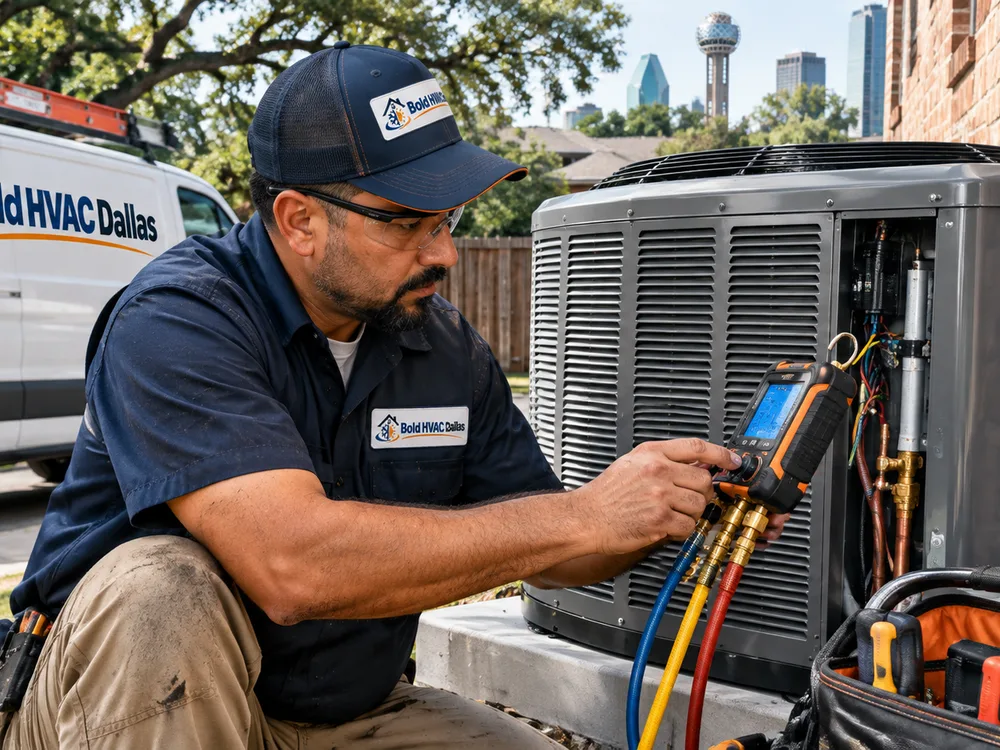
Tonnage should follow a load calculation, not the capacity of the old unit alone. Insulation changes, replacement windows, additions, and duct alterations can change the home's actual cooling requirement.
SEER2 is the current seasonal efficiency metric for new central air conditioning equipment. A higher rating may lower electricity use under comparable conditions, but equipment cost, operating habits, home efficiency, and installation quality affect the value of an upgrade.
Single-stage systems run at one cooling output. Two-stage and variable-capacity equipment can adjust output under compatible conditions, which may provide steadier temperatures and longer cycles for humidity removal.
A new unit cannot correct restricted returns, undersized ducts, crushed flex duct, or major leakage by itself. External static pressure and delivered airflow should be considered when existing ducts are retained.
The outdoor condenser, indoor coil, furnace or air handler, and controls must be approved as a matched combination. Mixing incompatible components can reduce efficiency, affect operation, and create warranty concerns.
Installation planning changes when equipment is in an attic, closet, rooftop position, or tight side yard. Access affects removal, safety, condensate protection, and the labor needed to set the new equipment.
We review the existing system, accessible ductwork, electrical service, equipment location, refrigerant piping, drainage, thermostat, and the comfort problems you want the new system to address.
Cooling requirements and system compatibility guide the recommendation. We explain capacity, efficiency, operating stages, equipment placement, and any supporting work included in the proposed scope.
The installation plan accounts for equipment access, removal of the old system, required materials, property protection, and applicable permit or inspection requirements. Work in Dallas may be subject to City of Dallas permitting and mechanical code requirements.
Technicians set and connect the indoor and outdoor components, complete electrical and control wiring, prepare the refrigerant circuit, configure drainage, and make agreed duct transitions or accessories.
The system is started, tested, and adjusted. We verify controls and key operating measurements, then review filter access, thermostat use, normal operation, and equipment documentation with you.
AC installation in Dallas typically costs about $7,000 to $16,000 for a residential central system, while high-efficiency, variable-capacity, large-capacity, or duct-modification projects can exceed that range. Equipment type and matched indoor components account for much of the difference.
Final pricing changes with cooling capacity, efficiency, attic or rooftop access, electrical work, line-set condition, drain upgrades, controls, permits, and duct corrections. A written proposal should identify the selected equipment and included labor. Bold HVAC Dallas confirms the exact cost after evaluating the property and installation requirements.
Dallas properties vary widely, so installation plans should reflect the building rather than rely on a metro-wide assumption. Older homes in Lakewood may have equipment and ducts fitted into limited attic or closet space. In Preston Hollow, larger floor plans or multiple comfort zones can require separate load and airflow decisions. Oak Lawn includes condos, townhomes, and detached homes where equipment access and property rules may affect scheduling and placement. Downtown Dallas installations can involve multistory buildings with controlled access and building management requirements.
Outdoor units also need appropriate clearance for airflow and service access. Placement should account for manufacturer instructions, drainage around the base, noise near occupied rooms, and safe access to the disconnect. In exposed locations, the condenser must sit level on a suitable base.
Oncor operates the electric delivery network across much of Dallas, while customers may buy electricity from retail providers. Utility rebates or efficiency programs can change, so current eligibility should be confirmed before equipment is ordered. Manufacturer promotions, tax provisions, and utility incentives may each use different equipment and documentation rules.

A useful proposal identifies the outdoor unit, indoor coil, furnace or air handler, efficiency rating, capacity, controls, labor, and supporting work. It should state whether the existing line set and ducts will be reused, modified, or replaced. Ask how condensate overflow will be handled, particularly when the indoor equipment is located over finished living space.
Confirm who handles required permits and inspections, how removed equipment and refrigerant are managed, and what workmanship and manufacturer warranty terms apply. Manufacturer warranties commonly require product registration within a stated period, so ask who completes registration and what records you should retain.
Installation quality deserves as much attention as the equipment brand. Ask whether the crew will evacuate the refrigerant circuit, commission the system, verify airflow, and record startup measurements. A lower proposal may exclude duct repairs, electrical changes, drain protection, permits, or controls that another proposal includes. Compare scopes line by line rather than comparing the final totals alone.
A site evaluation can identify the right system capacity, uncover installation constraints, and produce a written scope before equipment is ordered.
Call to ScheduleA straightforward residential replacement is often completed within one working day, while duct changes, electrical upgrades, difficult attic access, or multiple systems can extend the work. Permit and inspection scheduling may also affect the overall timeline for properties within the City of Dallas.
Mechanical work in Dallas may require a permit and inspection depending on the installation scope and jurisdiction. Requirements can differ between the City of Dallas and surrounding municipalities, so the project address and planned work should be checked before installation begins.
The correct size should be based on a cooling-load calculation rather than square footage alone. Window area, insulation, orientation, air leakage, occupancy, and duct performance all affect capacity, especially during North Texas summer conditions.
The furnace does not always need replacement, but its blower and controls must be compatible with the new cooling equipment and indoor coil. Age, condition, efficiency goals, available space, and whether the components form an approved matched system should guide the decision.
Existing ducts can often remain when they are correctly sized, reasonably sealed, and able to deliver the airflow required by the new system. Restricted returns, damaged flex duct, leakage, poor insulation, or high static pressure may require corrections as part of the installation scope.
A higher SEER2 rating is not automatically the best value for every property. The choice should account for equipment cost, expected use, compatible components, duct condition, comfort preferences, available incentives, and whether the system can achieve its rated performance after installation.
Yes, planned replacement allows time to compare matched systems, check current incentive requirements, and address duct or electrical needs before peak-season failure. Scheduling ahead is especially useful when attic access, building approval, or City of Dallas permitting may affect the work.
Tell Bold HVAC Dallas about your property, current equipment, and comfort concerns. We will assess the installation requirements and provide a clear recommendation for dependable cooling.