Warm Air or No Cooling
Warm supply air can result from a failed outdoor component, thermostat issue, airflow restriction, compressor problem, or refrigerant fault. Testing separates these causes before a repair is recommended.
Serving Dallas, Texas & surrounding areas
24/7 Emergency Response
Responsive cooling repair at any hour, with careful diagnostics, clear pricing, and repairs focused on restoring safe, dependable operation.
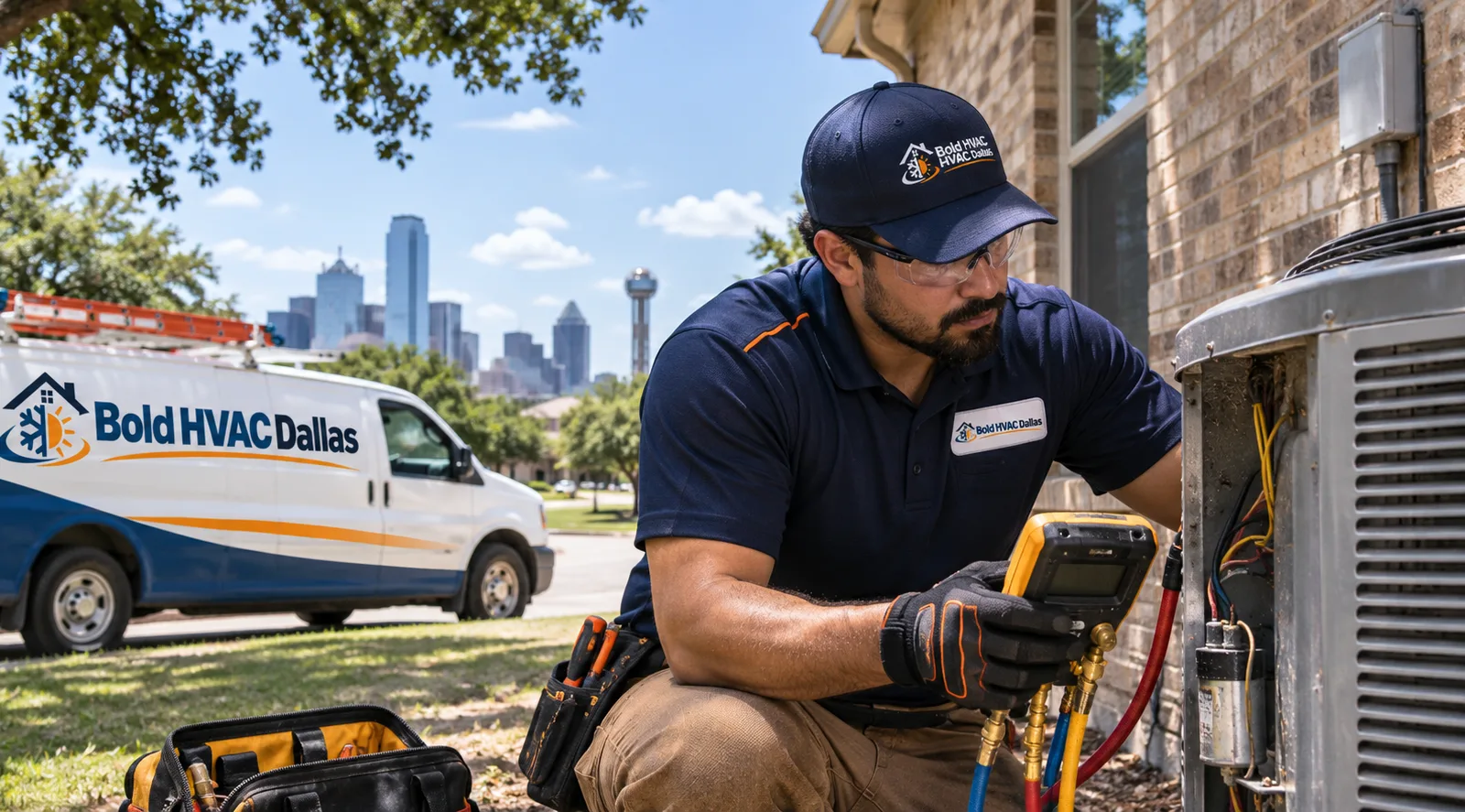
When the air conditioner quits during a North Texas heat spell, indoor temperatures can climb quickly. Emergency AC repair Dallas service should begin with a prompt response and a methodical diagnosis, not a rushed parts swap. Bold HVAC Dallas checks the symptoms, identifies the failed component, and explains the repair and price before approved work begins.
Our HVAC service specialists across Dallas handle urgent cooling problems in homes and commercial spaces, with service based in Dallas, TX 75201. Calls may involve a system that will not start, weak airflow, warm air at the vents, repeated circuit breaker trips, water around the indoor unit, or an outdoor condenser that runs without cooling the building. The immediate goal is to find the actual fault, restore operation when a sound repair is available, and identify any condition that makes continued use unsafe.
Turn the system off if you smell burning, hear electrical arcing, see smoke, or notice heavy water leakage near wiring. A small amount of condensation at the drain outlet can be normal, but water spreading around the air handler may indicate a blocked condensate line, damaged drain pan, or frozen evaporator coil. If a breaker trips again after one reset, leave it off. Repeated resets can expose wiring or equipment to further damage.
A technician starts with the thermostat and electrical supply, then follows the cooling sequence through the indoor and outdoor equipment. Depending on the symptoms, testing may include the disconnect, breaker, contactor, capacitor, blower motor, condenser fan, compressor, temperature split, static pressure, condensate safety switch, and refrigerant circuit.
Common urgent repairs include replacing a failed capacitor or contactor, correcting loose electrical connections, clearing a blocked condensate drain, repairing damaged low-voltage wiring, replacing a failed fan motor, or addressing a thermostat fault. A frozen coil requires more than thawing. Low airflow, a dirty filter, blower trouble, or a refrigerant problem may have caused the ice, and that cause must be checked before normal operation resumes.
Refrigerant is not consumed like fuel. A system that is low usually has a leak or another service issue, so adding refrigerant without investigating the cause may provide only temporary relief. Refrigerant work must also match the equipment and applicable handling requirements. The technician should explain whether a repair is practical, whether more testing is needed, or whether aging equipment has a failure that makes replacement worth considering.
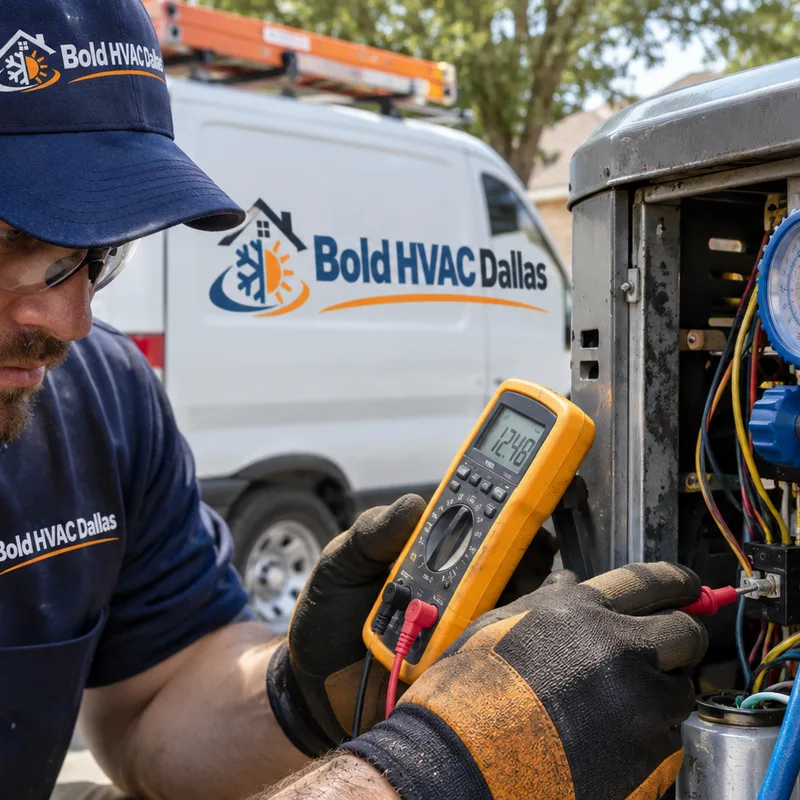
Warm supply air can result from a failed outdoor component, thermostat issue, airflow restriction, compressor problem, or refrigerant fault. Testing separates these causes before a repair is recommended.
A blank thermostat, open condensate safety switch, failed capacitor, damaged contactor, tripped disconnect, or control problem can interrupt the startup sequence.
Ice on the refrigerant line or evaporator coil restricts airflow and can send liquid water outside the drain system as it melts. The equipment should remain off until it thaws and can be assessed.
Repeated trips may point to a short, failing motor, compressor fault, damaged wiring, or excessive current draw. Continually resetting the breaker is not a repair.
A clogged drain, failed condensate pump, cracked pan, or frozen coil can release water near ceilings, floors, and electrical components. Prompt attention can limit additional property damage.
Electrical smells, grinding, loud buzzing, or metal-on-metal sounds warrant shutdown. Continuing to run the system may worsen a motor, fan, wiring, or compressor failure.
Tell us when the trouble started, what the thermostat shows, whether air is moving, and whether you noticed ice, water, odors, noise, or a tripped breaker. These details help prepare for the visit.
Shut the equipment off when there is smoke, a burning smell, electrical arcing, severe leakage, or repeated breaker trips. Keep access to the thermostat, indoor unit, electrical panel, and outdoor condenser clear.
The technician verifies the complaint and checks the components tied to it. Measurements may include voltage, amperage, capacitance, airflow, temperature change, and refrigerant operating conditions.
You receive an explanation of the failed part or condition, the proposed work, and the price before the repair proceeds. If more than one practical option exists, the differences should be clear.
After approval, the technician completes the available repair and runs the system through a cooling cycle. Final checks confirm that the equipment starts, drains, moves air, and operates within the conditions that can be verified during the visit.
Dallas cooling systems work through long periods of high outdoor temperatures, and emergency demand rises when hot weather places sustained load on compressors, capacitors, fan motors, and electrical connections. An outdoor condenser also needs open airflow. Cottonwood, grass clippings, and debris packed against the coil can interfere with heat rejection, though the unit should be shut off before any condition around the coil is addressed.
The service approach can vary with the property. Older homes in Oak Cliff may have equipment installed in tight closets or attics, which can make drainage, duct, and access conditions part of the diagnosis. Lakewood includes older houses where additions and equipment changes may have produced uneven duct layouts. Downtown Dallas has apartments, offices, and mixed-use buildings where roof access, building controls, and property authorization can affect how quickly equipment is reached. In Preston Hollow, larger homes may use multiple systems or zoning, so the technician must identify which unit and controls serve the affected rooms.
Oncor delivers electricity across much of the Dallas area, but a neighborhood outage or utility-side issue is different from a fault inside the property. If nearby properties have also lost power, utility outage information may clarify the cause. If power is available but the air conditioner alone is down, equipment-level diagnosis is appropriate.

Emergency AC repair in Dallas typically costs about $200 to $1,500, including common diagnostic and repair work. A straightforward electrical component or drain repair may fall near the lower end, while motor, control, refrigerant, or compressor-related work can cost more.
Final pricing depends on the failed component, equipment type, refrigerant, part availability, access, after-hours timing, and whether additional damage is found. The technician should diagnose the fault and present the repair price before work begins. Your exact cost is confirmed during the service visit.
An emergency visit should answer two questions: what stopped the system, and what is the sensible next step? A repair may be straightforward when the equipment is otherwise in sound condition and the failed component is available. A more expensive failure may call for a broader discussion when the system has major refrigerant leaks, compressor damage, obsolete parts, or several failing components.
Clear recommendations distinguish confirmed faults from conditions that cannot be fully judged during an emergency visit. For example, a failed capacitor can be measured directly. Duct leakage hidden behind finished surfaces may require separate investigation. Likewise, restoring a disconnected wire does not prove that every component has years of life remaining. Honest limits matter.
Before the technician arrives, replace a visibly clogged filter only if it is safe and easy to reach. Do not open electrical panels, bypass a float switch, chip ice from a coil, or use an extension cord to power HVAC equipment. Keep pets secured and move stored items away from the indoor unit. If anyone in the property is sensitive to heat, move that person to a cooler location while service is underway.
A cooling failure rarely improves by running the system harder. Arrange a prompt diagnosis so the fault, repair options, and price can be established before additional damage occurs.
Call to ScheduleYes, Bold HVAC Dallas provides responsive emergency cooling service at any hour, subject to technician and part availability. After-hours work commonly starts with diagnosis and safety checks; if a required motor, control board, compressor, or other specialized part is unavailable, the technician will explain the next practical step.
Arrival time depends on current call volume, technician location, traffic, weather, building access, and the urgency of the reported condition. Dallas travel times can change sharply during commute periods or severe weather, so the response window is confirmed when service is arranged rather than promised as a fixed citywide time.
Turn it off if you see ice, smell burning, hear harsh mechanical noise, find substantial water leakage, or experience repeated breaker trips. If the system is simply blowing warm air without those warning signs, switching it off can still prevent needless operation while you wait for diagnosis.
A frozen coil can often be diagnosed during an emergency visit, but it must thaw before airflow and refrigerant conditions can be tested accurately. In Dallas heat, thawing time varies with the amount of ice and equipment location. The technician will check likely causes such as a clogged filter, blower fault, restricted ductwork, dirty coil, or refrigerant issue.
Yes, the proposed price should be presented after the fault has been diagnosed and before approved repair work begins. The amount depends on the component, equipment access, after-hours timing, refrigerant requirements, and part availability. Additional work should be discussed if testing reveals a separate problem.
Many common split systems, heat pumps, and packaged units can be diagnosed regardless of brand, but repair completion depends on the fault and availability of compatible parts. Brand-specific control boards, variable-speed motors, communicating thermostats, and compressor components may require exact replacements that are not stocked after hours.
Provide the property type, equipment symptoms, thermostat display, approximate system location, and any signs of water, ice, electrical odor, noise, or breaker trouble. For Downtown Dallas buildings, access instructions, parking limits, roof authorization, and property-management requirements can also affect how quickly the technician reaches the equipment.
Replacement may be worth discussing when the system has a major compressor failure, an extensive refrigerant leak, unavailable parts, or several costly faults. Equipment age alone does not decide the issue. The repair price, overall condition, refrigerant type, comfort problems, and expected reliability should be considered together.
Tell Bold HVAC Dallas what the system is doing and when the problem started. We will help arrange responsive diagnosis and explain the available repair path before approved work begins.