Heating and Cooling Equipment
Compare heat pumps, furnaces, central air conditioners, ductless systems, and packaged units by capacity, efficiency rating, controls, service access, and compatibility with the existing building.
Serving Dallas, Texas & surrounding areas
24/7 Emergency Response
Practical heating and cooling guidance, equipment insight, and direct access to local professionals who understand North Texas buildings.
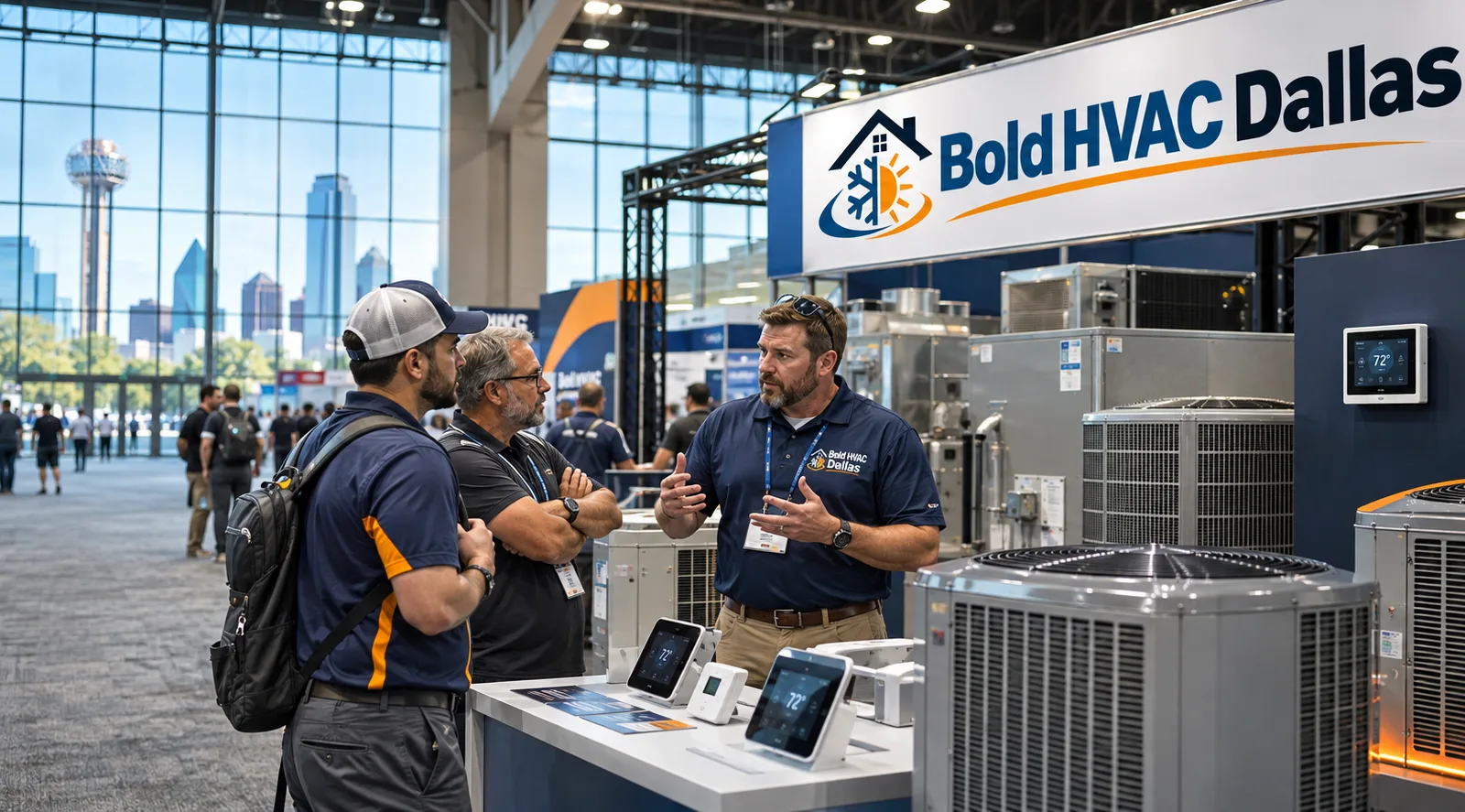
A Dallas HVAC convention brings contractors, property teams, equipment representatives, and building owners together to discuss the systems that keep local properties comfortable. The useful conversations are practical: selecting equipment for long cooling seasons, improving airflow, planning preventive maintenance, understanding refrigerant changes, and deciding when repair still makes financial sense.
Bold HVAC Dallas brings that same practical approach to customers across the city. Our team of HVAC service pros throughout Dallas helps property owners turn technical information into a workable plan for their building. That may involve checking load requirements before replacement, tracing a comfort problem to restricted airflow, reviewing controls, or setting priorities for aging equipment.
Convention displays can make equipment look straightforward, but field conditions determine whether it performs as intended. Duct design, return-air capacity, electrical service, condensate drainage, equipment location, and installation quality all matter. A useful recommendation starts with the property rather than a product brochure.
An HVAC convention commonly organizes information around equipment, controls, service practices, indoor air quality, and building performance. Attendees may compare split systems, packaged rooftop units, variable-speed compressors, heat pumps, smart thermostats, zoning controls, filtration products, and diagnostic tools. Technical sessions often address commissioning, refrigerant handling, airflow measurement, maintenance records, and code considerations.
For a homeowner, the value is learning which questions to ask before approving work. For a facility manager, it is a chance to compare maintenance strategies, controls, replacement planning, and service access across multiple buildings. Contractors use these events to review current equipment and installation requirements, but the final recommendation still needs a field inspection.
Product availability, session schedules, admission rules, and exhibitor lists are controlled by each event organizer. Confirm those details directly with the organizer before making travel or purchasing plans. Bold HVAC Dallas provides HVAC services rather than claiming to operate or host a trade event.
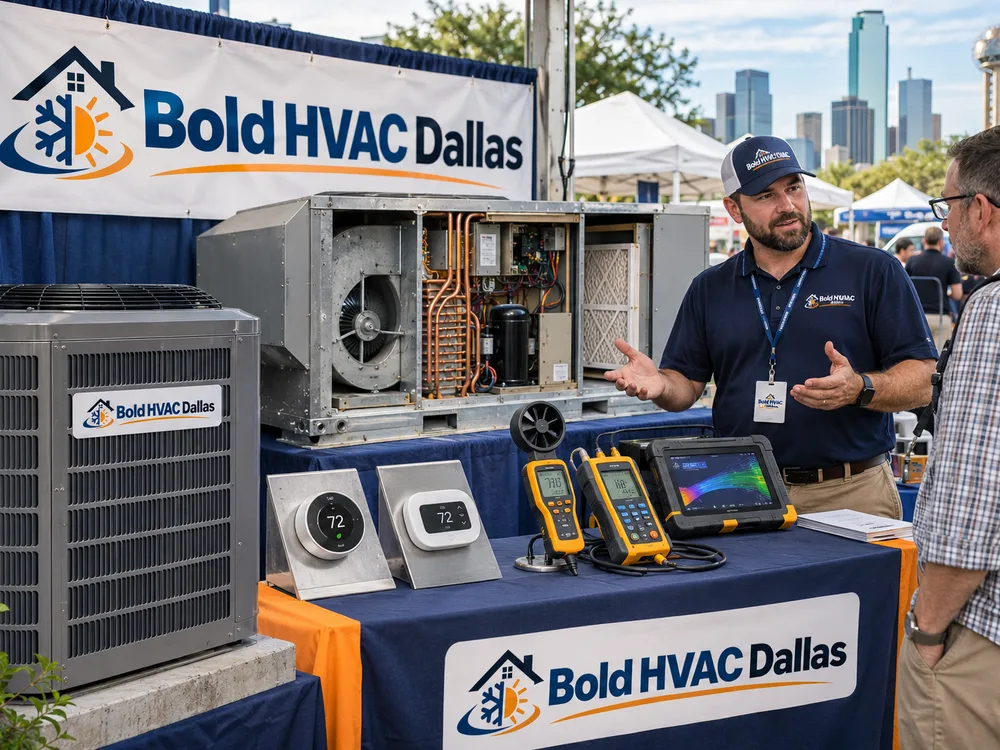
Compare heat pumps, furnaces, central air conditioners, ductless systems, and packaged units by capacity, efficiency rating, controls, service access, and compatibility with the existing building.
Static pressure, return-air capacity, duct leakage, filter resistance, and register placement can affect comfort even when the equipment itself is operating.
Thermostats, sensors, communicating controls, and zone dampers need to match the system. Added complexity is useful only when it solves a defined control or comfort problem.
Filtration, ventilation, humidity control, and coil cleanliness should be considered together. A high-resistance filter may require an airflow review before installation.
A sound maintenance plan includes accessible filters, clean heat-transfer surfaces, clear condensate drains, electrical checks, measured system operation, and written service records.
Age alone does not settle the decision. Diagnosis, repair history, parts availability, operating condition, refrigerant type, and the cost of correcting installation defects all affect the choice.
North Texas has long periods of high cooling demand, so equipment selection needs to address both capacity and moisture removal. Oversized equipment may satisfy a thermostat quickly without running long enough for effective dehumidification. Proper sizing starts with a Manual J load calculation for residential work, followed by equipment selection and duct review rather than a simple match to the old unit's nominal tonnage.
Building type also matters. Downtown Dallas commercial properties may rely on rooftop units, building automation, or tenant-specific zoning. Oak Lawn includes multifamily and commercial spaces where equipment access and shared building systems can affect scheduling. Lakewood's older homes may have additions or altered ductwork that need closer airflow review. Preston Hollow's larger houses can have multiple systems and long duct runs, while newer construction in Uptown may use tightly coordinated mechanical spaces with access limits.
Oncor operates the electric delivery system across much of Dallas, while customers may select a retail electricity provider. Electrical demand, available circuits, disconnects, and panel capacity should be checked when a project changes equipment type or adds powered accessories.
Start with specific symptoms or goals, such as uneven temperatures, excessive run time, noise, rising repair frequency, poor humidity control, or planned equipment replacement.
Record model information and examine the equipment, controls, electrical connections, filters, coils, condensate management, accessible ductwork, and service clearances.
Useful measurements may include temperature split, static pressure, airflow, electrical readings, refrigerant data, combustion readings where applicable, and a load calculation for replacement design.
Review repair scope, equipment compatibility, efficiency ratings, comfort effects, warranty terms, access requirements, and changes needed to ducts, drains, controls, or electrical components.
The written scope should identify the equipment and major tasks, state assumptions, address disposal and commissioning, and clarify what conditions could require a change.
Start with ratings that match the equipment category. Central air conditioners and heat pumps may be compared using SEER2 and EER2 for cooling performance, while heat pumps also carry HSPF2 ratings. Furnaces use AFUE. These ratings support comparison, but they do not correct poor sizing, restrictive ductwork, inadequate refrigerant charging, or weak commissioning.
Ask how the proposed capacity was determined and whether the ducts can move the required air at an acceptable static pressure. Confirm what will be replaced, what will remain, and whether the quoted combination is an approved matched system. For heat pumps, discuss auxiliary heat, controls, defrost operation, and electrical requirements. For commercial units, ask about curb compatibility, crane access, economizer requirements, controls integration, and shutdown planning.
Refrigerant rules and available product lines change over time. A contractor should identify the refrigerant used by the proposed equipment and explain any safety, service, or installation requirements that apply. Promotional claims should be supported by published manufacturer data and a written scope suited to the property.
Bring your equipment questions, comfort concerns, or replacement ideas to Bold HVAC Dallas for a property-specific assessment and a written plan.
Call to ScheduleBold HVAC Dallas provides local HVAC services and should not be assumed to organize a convention. Event ownership, dates, admission, exhibitors, and venue policies must be confirmed with the named event organizer. Our role is to help Dallas property owners assess heating and cooling needs and apply relevant equipment information to a real building.
Attendance costs depend entirely on the specific event, pass type, training sessions, and organizer policies. Some trade displays may offer limited admission, while conferences with technical education can require paid registration. Confirm pricing and eligibility through the event organizer before traveling, since Bold HVAC Dallas does not set convention admission fees.
Homeowner access depends on the event's admission rules. Some events welcome the public, while others limit registration to contractors, facility teams, manufacturers, distributors, or credentialed trade professionals. Verify access in advance and bring property details if you plan to discuss equipment, including system type, model information, floor area, known comfort problems, and utility-use history.
No, equipment should be selected after the building's load, duct system, electrical capacity, controls, drainage, and installation conditions have been reviewed. A demonstration can explain technology, but it cannot establish the correct capacity or scope for a Lakewood house, an Uptown multifamily unit, or a downtown commercial property.
Ask how capacity was determined, whether the indoor and outdoor units are a matched combination, what efficiency ratings apply, and whether duct, electrical, drain, control, or ventilation changes are included. The written scope should also address permits when required, equipment registration, startup measurements, warranty terms, disposal, and the conditions that could change the price.
The time depends on the building and the decision being made. A straightforward residential equipment assessment may fit within one service visit, while a property with multiple systems, zoning problems, difficult rooftop access, or suspected duct restrictions may require more testing and planning. Commercial replacement work often needs coordination around tenant schedules and equipment shutdowns.
Yes, but new products must be evaluated against the home's existing construction and mechanical system. Older Dallas properties may have altered floor plans, additions, limited return air, or ducts installed for earlier equipment. Those conditions should be inspected before selecting variable-speed equipment, zoning controls, higher-efficiency filtration, or a different heating method.
Tell Bold HVAC Dallas what you learned, what your system is doing, and what you want to improve. We will help identify the next useful step based on the equipment and the property.