Matched Equipment
The indoor coil, outdoor unit, furnace or air handler, and controls should be approved to work together. Ask for complete model numbers and the applicable AHRI matched-system reference when available.
Serving Dallas, Texas & surrounding areas
24/7 Emergency Response
Get a properly sized system, a clear written estimate, and professional installation planned around your home's comfort needs.
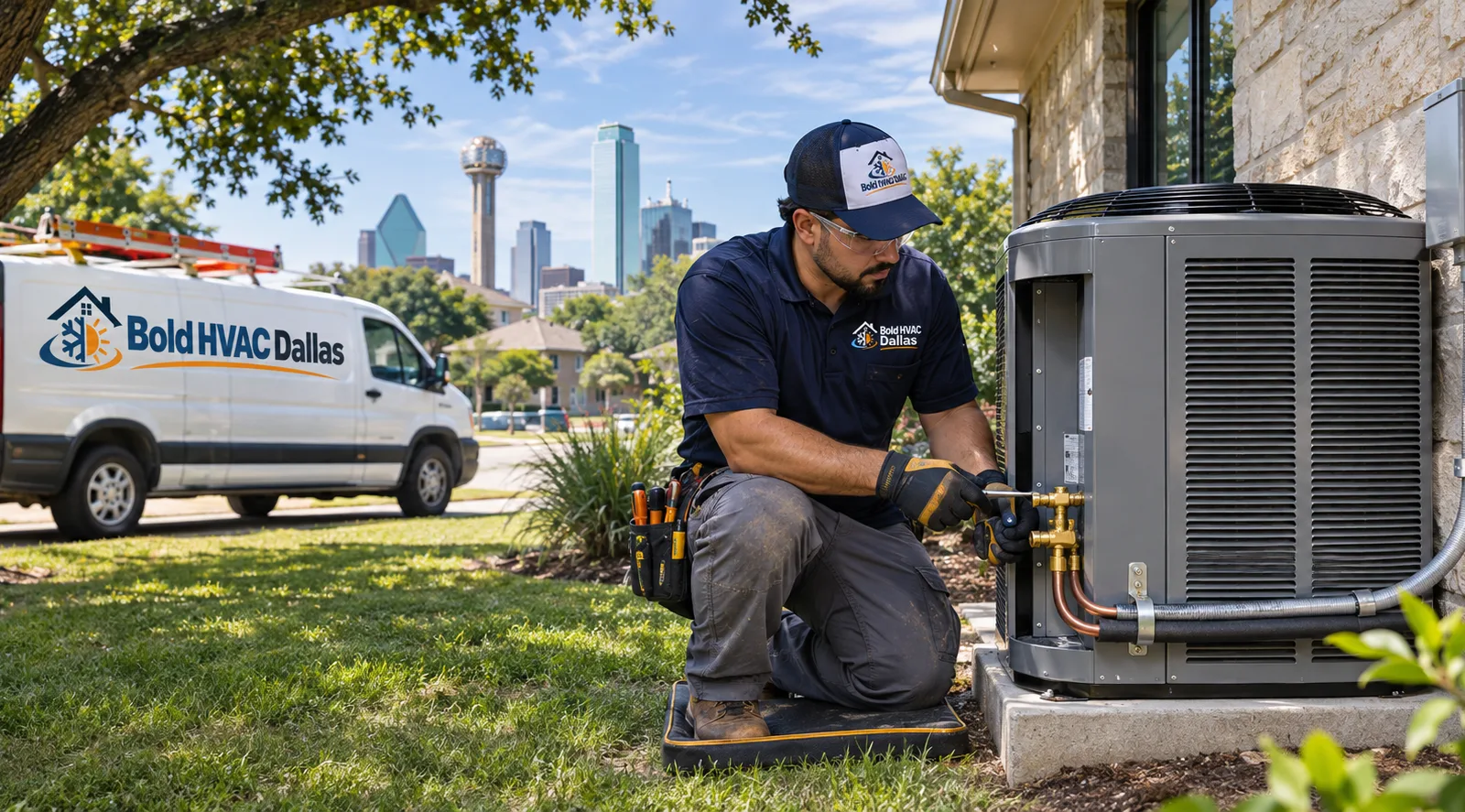
HVAC replacement in Dallas starts with more than choosing a brand or matching the capacity printed on the old equipment. The new system should fit the home's cooling load, ductwork, electrical service, and comfort problems. Dallas summers place long, demanding run times on air conditioners, while winter conditions still require dependable heating. Correct sizing and installation affect comfort, humidity control, noise, and equipment life.
Bold HVAC Dallas evaluates the existing indoor and outdoor equipment, thermostat, accessible ductwork, drain setup, refrigerant lines, disconnect, and service access. Our HVAC service specialists in the Dallas area then explain which components need replacement, which can remain, and what installation changes are included. You receive a written scope that identifies the proposed equipment and the work required to put it into service.
Replacement may involve a split air conditioner and furnace, a heat pump system, or another configuration suited to the property. Equipment selection should account for Manual J load calculations when appropriate, matched-system ratings, available space, filtration needs, and the condition of the air distribution system. The objective is steady comfort throughout the home, not simply a newer box outside.
HVAC replacement cost in Dallas typically ranges from $7,000 to $15,000 for a complete residential split system, while higher-efficiency, variable-capacity, heat pump, or duct-modification projects can exceed $20,000. Replacing only one matched component may cost less, but compatibility must be verified.
Final pricing changes with system capacity, efficiency rating, equipment type, controls, electrical work, refrigerant-line condition, access, code-related updates, and duct repairs. A written estimate should identify the model numbers, labor, removal, startup, and warranty terms. The exact cost is confirmed after an on-site assessment.
An aging system can fail for several reasons, so the assessment should separate equipment problems from airflow or building issues. A technician checks temperature change across the indoor coil, static pressure where testing access allows, blower condition, filter restrictions, return-air capacity, supply airflow, drainage, electrical connections, and signs of refrigerant leakage. Uneven rooms may point to duct leakage, poor balancing, inadequate returns, or an incorrectly sized system.
Dallas housing varies by area and era. Older homes in Lakewood and Oak Cliff can have tight equipment access, additions, or duct systems altered over time. Ranch-style homes in North Dallas may have long attic duct runs that deserve inspection before equipment is selected. In newer subdivisions around Frisco and Plano, existing zoning, communicating controls, or high-efficiency equipment can affect compatibility and replacement scope. These conditions matter because new equipment cannot correct every distribution problem by itself.
Attic conditions also deserve attention. North Texas heat can make attic duct leakage and damaged insulation especially costly to comfort. When accessible ducts are part of the problem, recommended repairs should be listed separately rather than hidden inside the equipment price.
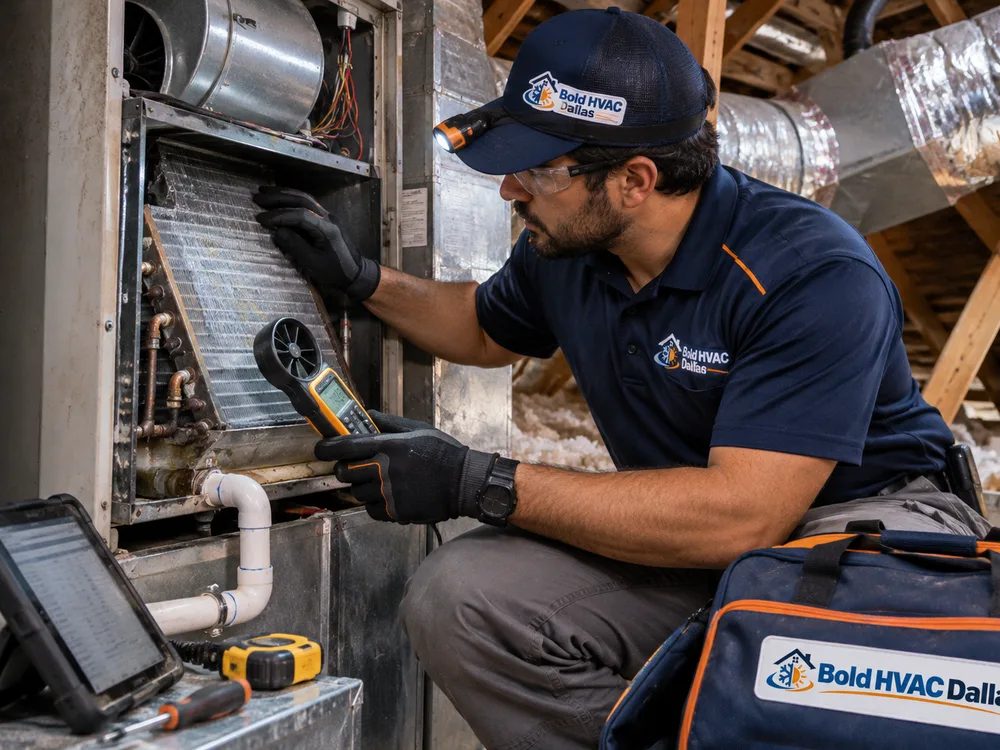
The indoor coil, outdoor unit, furnace or air handler, and controls should be approved to work together. Ask for complete model numbers and the applicable AHRI matched-system reference when available.
Capacity should be based on the home's actual load rather than automatically copying the old unit. Oversized equipment may cycle too quickly, while undersized equipment may struggle during peak weather.
Compare rated system efficiency, operating stages, blower type, and control requirements. SEER2 and HSPF2 ratings apply to current equipment categories, but installation quality still affects real operation.
A useful estimate states whether it includes equipment removal, a new pad or brackets, drain work, line-set treatment, electrical updates, thermostat setup, permits, startup testing, and cleanup.
Review manufacturer registration requirements, parts coverage, labor coverage, and exclusions. Ask who completes registration and what maintenance records the warranty requires.
If testing finds restrictive returns, damaged ducts, or excessive static pressure, the estimate should distinguish those corrections from the basic equipment replacement.
We review the equipment, controls, accessible ducts, drain routing, electrical connections, refrigerant piping, installation clearances, and the comfort concerns you have noticed.
We consider conditioned area, insulation, windows, orientation, air leakage, occupancy, and other load factors. A Manual J calculation may be recommended when the existing size is questionable or the home has changed.
You receive options based on compatible equipment, efficiency, comfort features, available space, and budget. The written estimate states what is included so competing proposals can be compared fairly.
The old equipment is disconnected and removed. The replacement is set, sealed, drained, wired, and connected according to manufacturer requirements and the agreed scope.
Startup includes checking electrical readings, airflow, temperature performance, condensate drainage, refrigerant operation, thermostat settings, and safety controls as applicable.
We explain thermostat use, filter size and access, maintenance needs, warranty documentation, and any operating details specific to the installed system.
Replace an unreliable system before peak weather turns a planned project into an urgent decision. An on-site assessment gives you equipment options, a defined scope, and a realistic installed price.
Call to ScheduleA higher efficiency rating can be useful, but it is one part of the decision. Single-stage systems use straightforward on-and-off operation. Two-stage and variable-capacity systems can run at lower output when the full capacity is unnecessary, which may improve temperature consistency and sound levels. Variable-speed indoor blowers can also support better airflow control when the ducts are suitable.
Heat pumps provide both cooling and electric heating. Dual-fuel systems pair a heat pump with a gas furnace, while conventional split systems may use an air conditioner with a furnace. The right choice depends on the home's utilities, existing infrastructure, electrical capacity, comfort preferences, and project budget. Equipment labels alone do not settle that decision.
Dallas is within the Oncor service territory in many locations, although utility arrangements vary by address. Any current efficiency incentives, tax credits, or utility programs should be checked before purchase because eligibility rules and qualifying model requirements can change. Product registration deadlines should also be confirmed soon after installation.
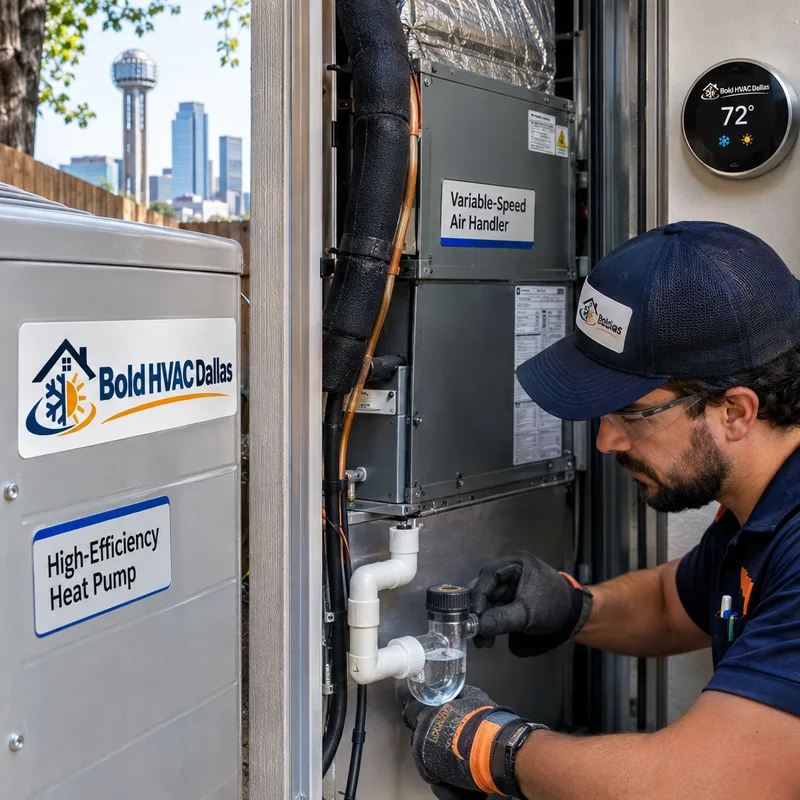
Replacement deserves consideration when the system has a failed major component, uses an obsolete refrigerant, needs repeated repairs, or no longer maintains acceptable temperatures. It can also be reasonable when indoor and outdoor components are mismatched or when repair costs would be invested in equipment already near the end of its expected service life.
Age alone does not decide the issue. A well-maintained older unit with a minor electrical problem may still be repairable. A newer system with a damaged compressor, leaking coil, airflow defects, or poor prior installation may require a more careful cost comparison. Ask for the repair price, replacement price, expected warranty coverage, and any unresolved duct or electrical work in writing.
If failure is isolated and the system remains a sound candidate for repair, replacement should not be presented as the only choice. The best recommendation accounts for equipment condition, parts availability, refrigerant type, comfort performance, and how long you plan to keep the property.
A straightforward residential HVAC replacement is often completed within one working day, while projects involving duct changes, electrical upgrades, difficult attic access, zoning, or multiple systems may take longer. The schedule should be confirmed after the equipment location and full scope are inspected.
Both units often need replacement when compatibility, refrigerant, efficiency ratings, or manufacturer requirements prevent a proper match. A split system's outdoor unit, indoor coil, blower, and furnace or air handler work together. Keeping one component is appropriate only when a verified combination is available and its condition supports reuse.
The correct size depends on a load calculation, not square footage alone. Dallas cooling loads are affected by insulation, window area, sun exposure, air leakage, ceiling height, duct location, and occupancy. Manual J is the recognized residential method for estimating heating and cooling loads.
The better choice depends on available utilities, electrical capacity, equipment costs, comfort preferences, and the home's existing setup. Heat pumps provide cooling and electric heating, while an air conditioner paired with a furnace uses separate cooling and combustion heating equipment. Dual-fuel configurations are another option when the property supports them.
Mechanical replacement work within the City of Dallas can require permits and inspections, depending on the scope. Electrical, gas, or structural changes may add requirements. The installer should identify applicable permits in the written scope and coordinate required inspections for the property jurisdiction.
New equipment fixes uneven temperatures only when the old equipment is the cause. Restrictive returns, leaking ducts, poor insulation, closed dampers, room additions, and solar exposure can leave comfort problems unresolved. Airflow and accessible duct conditions should be assessed before the replacement size is finalized.
The estimate should list model numbers, matched-system details, capacity, efficiency rating, labor, removal, permit responsibility, thermostat work, drain and line-set treatment, electrical changes, startup testing, warranties, and exclusions. Dallas attic access or duct corrections should be identified as separate scope items when they apply.
Tell Bold HVAC Dallas what your system is doing and which rooms are difficult to keep comfortable. We will assess the equipment, explain suitable replacement options, and provide a written estimate before installation begins.