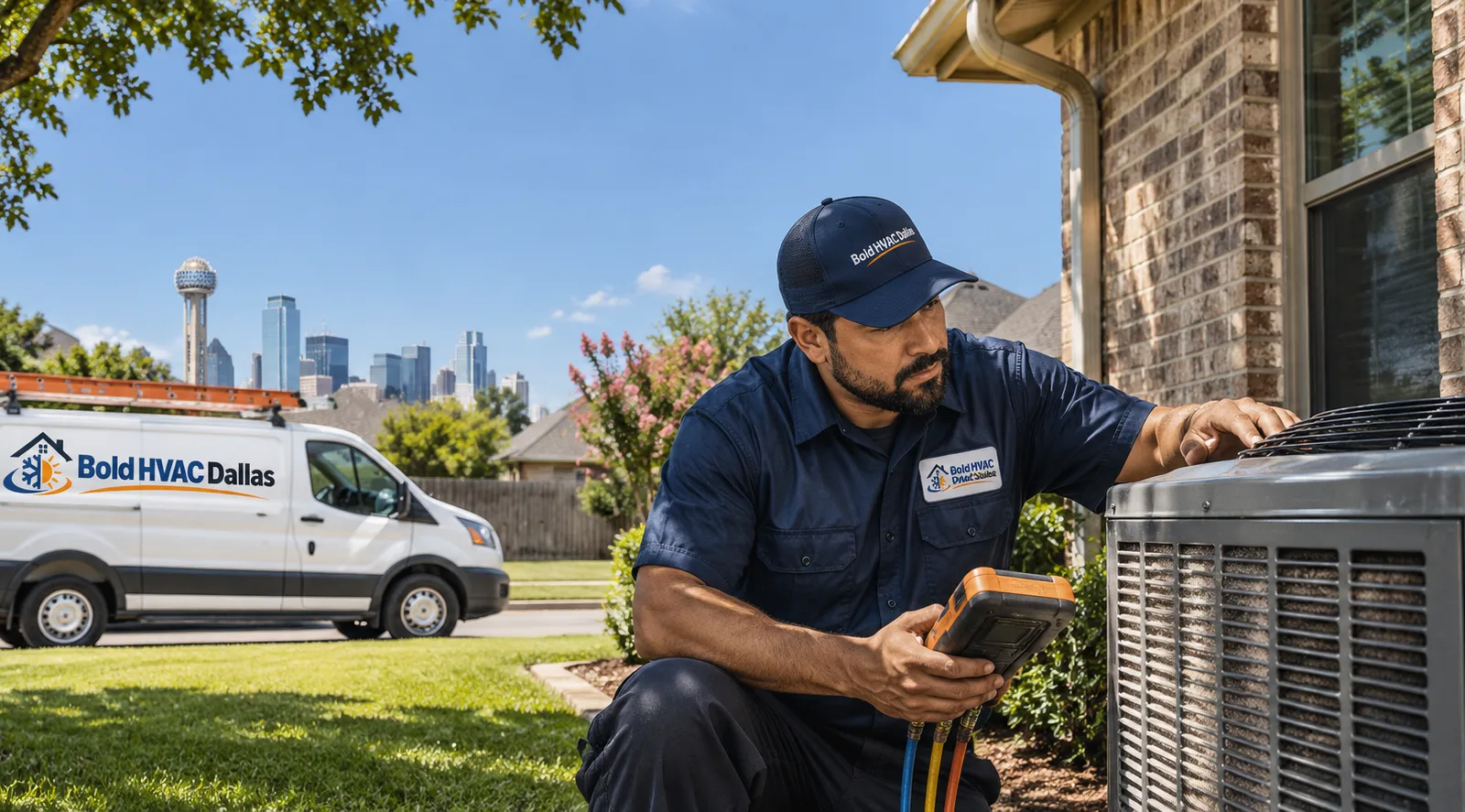
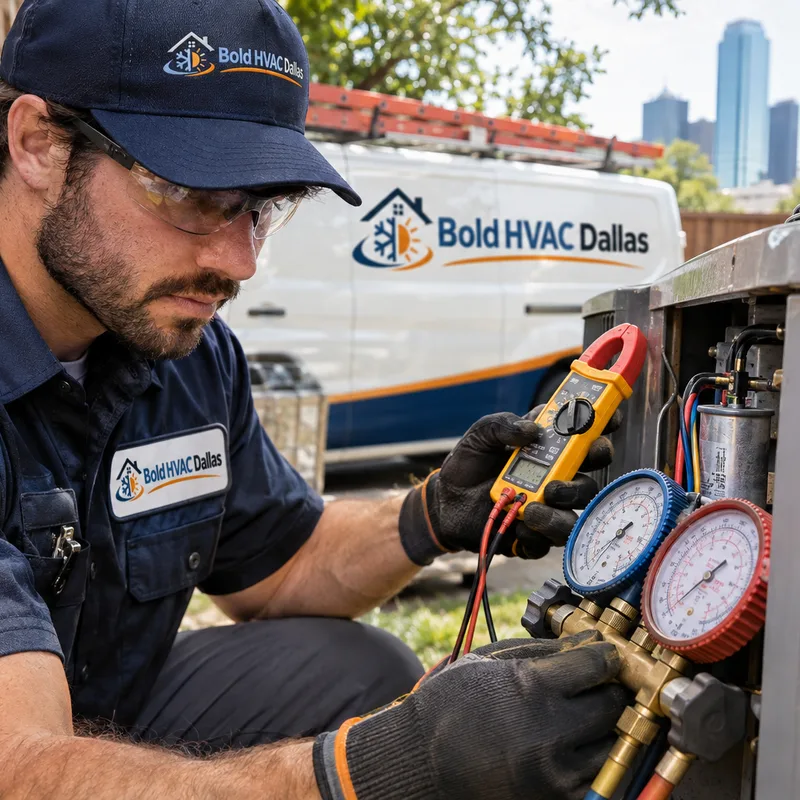
A useful diagnosis separates the symptom from its cause. If an air conditioner is not cooling, for example, the technician may compare return-air and supply-air temperatures, inspect the evaporator and condenser coils, test capacitors and contactors, and check blower operation. Refrigerant readings should be interpreted with operating conditions and manufacturer specifications rather than used alone.
Heating equipment requires its own checks. Gas furnaces may need inspection of the ignition sequence, flame sensing, venting, limit controls, and heat exchanger condition. Heat pumps use refrigerant for both heating and cooling, so diagnosis can involve the reversing valve, defrost controls, auxiliary heat, and outdoor temperature conditions.
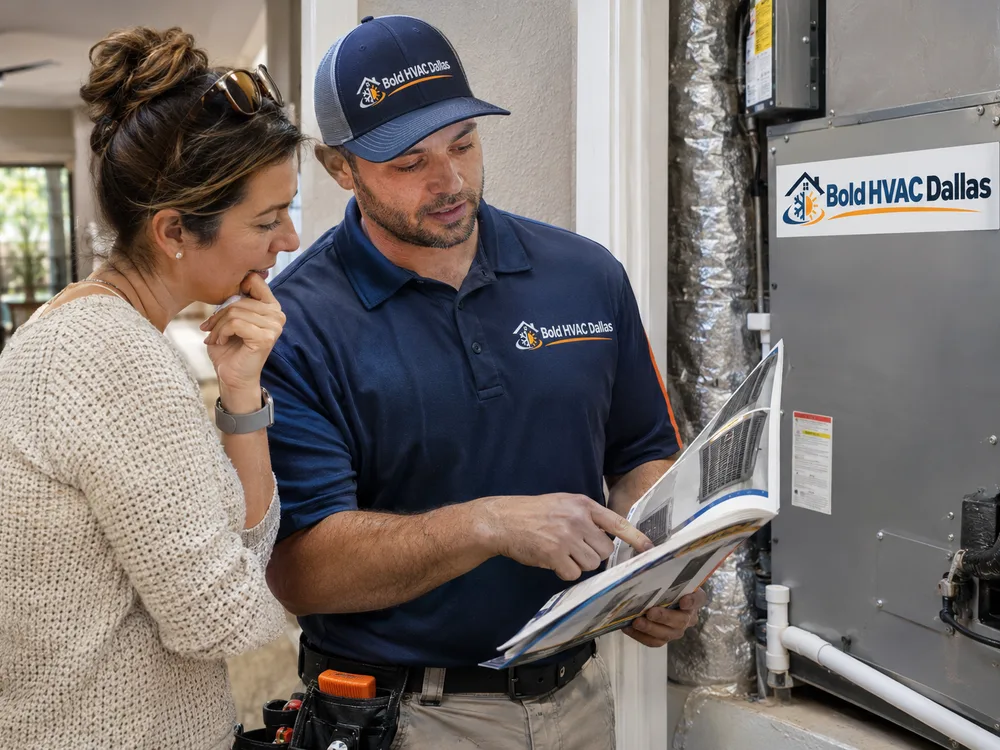
Airflow matters in every season. A clogged filter, closed register, damaged duct, or undersized return can reduce comfort and place added strain on equipment. Dallas HVAC air conditioning service should account for the complete system, including the outdoor unit, indoor coil, blower, ductwork, drains, thermostat, and electrical supply.