Fewer Disruptive Failures
Loose connections, worn belts, clogged drains, and failing capacitors can often be identified during planned service. Addressing them early reduces the chance that a small defect will interrupt business operations.
Serving Dallas, Texas & surrounding areas
24/7 Emergency Response
Planned care for rooftop units, split systems, heat pumps, and other commercial equipment, with service organized around your facility and operating schedule.
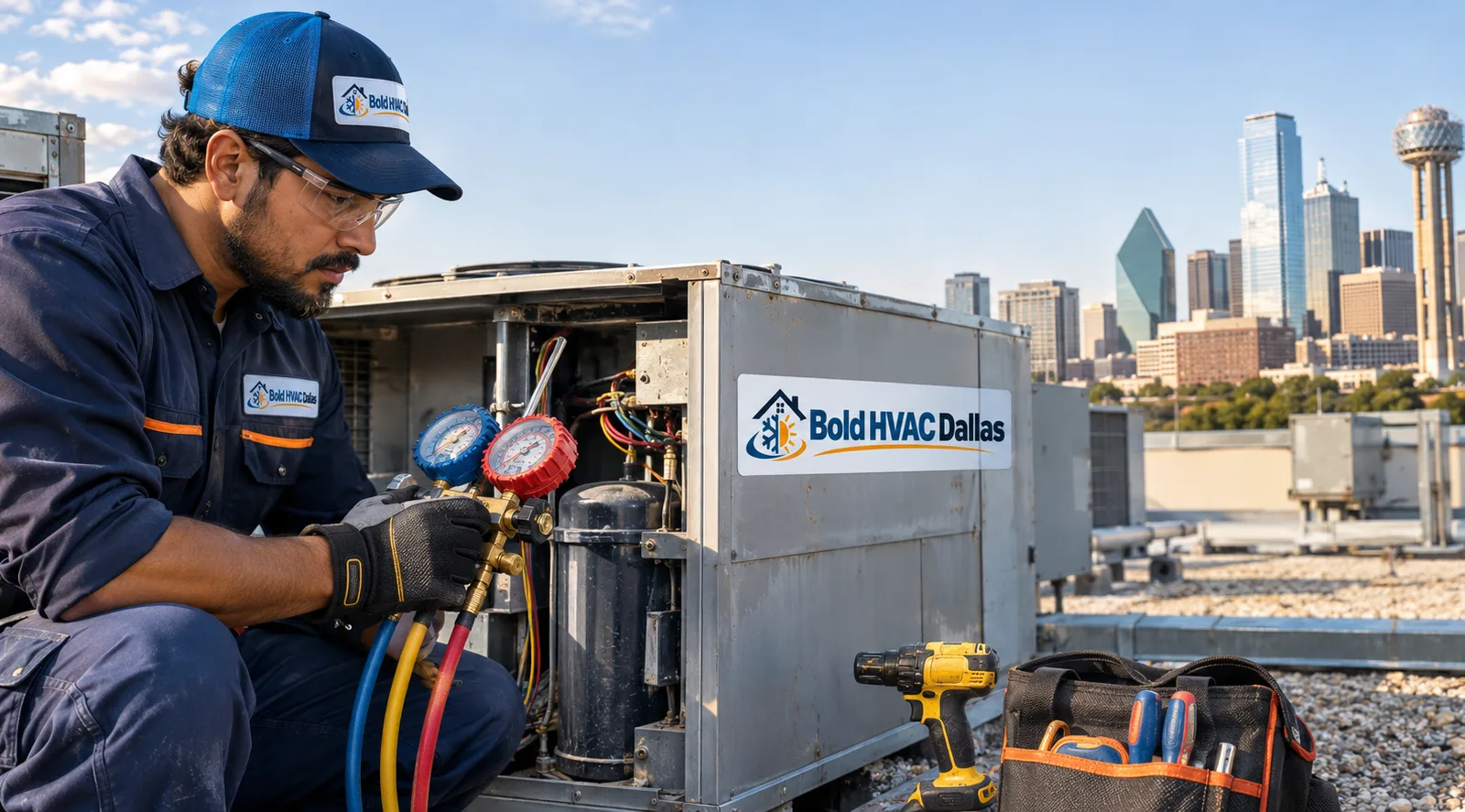
Commercial HVAC maintenance Dallas TX businesses can rely on starts with the equipment, occupancy, and operating demands of each property. A small professional office does not place the same load on its system as a restaurant, retail floor, warehouse, or multi-tenant building. Bold HVAC Dallas accounts for those differences when planning inspection intervals and maintenance tasks.
Our HVAC service crew around Dallas, TX checks system condition, records findings, and prioritizes work according to operational impact. The goal is to catch wear, restricted airflow, drainage trouble, and control issues before they cause avoidable downtime. You receive a practical account of what was inspected, what needs attention now, and what should be monitored.
Dallas heat can keep commercial cooling equipment under sustained demand. Cottonwood, dust, grease, and debris may also restrict coils and filters depending on the property's surroundings and use. Regular service helps equipment reject heat, maintain airflow, and operate closer to its intended sequence.
A maintenance visit should cover more than a filter change. The technician evaluates the system as a group of connected components, including electrical controls, airflow, refrigeration, condensate management, and thermostat or building-control operation.
Typical work includes inspecting and replacing filters as needed, cleaning accessible condenser and evaporator surfaces, checking belts and sheaves, lubricating serviceable bearings, testing capacitors and contactors, tightening electrical connections, and checking blower assemblies. The technician also clears or inspects condensate drains, looks for corrosion and water damage, checks operating temperatures, and reviews refrigerant-side performance when system conditions call for it.
For packaged rooftop units, maintenance may include economizer inspection, damper operation, cabinet condition, curb or panel concerns, and heating-component checks before colder weather. Commercial split systems and heat pumps require equipment-specific procedures. Refrigerant should never be added automatically. A low charge can indicate a leak, so diagnosis comes before corrective work.
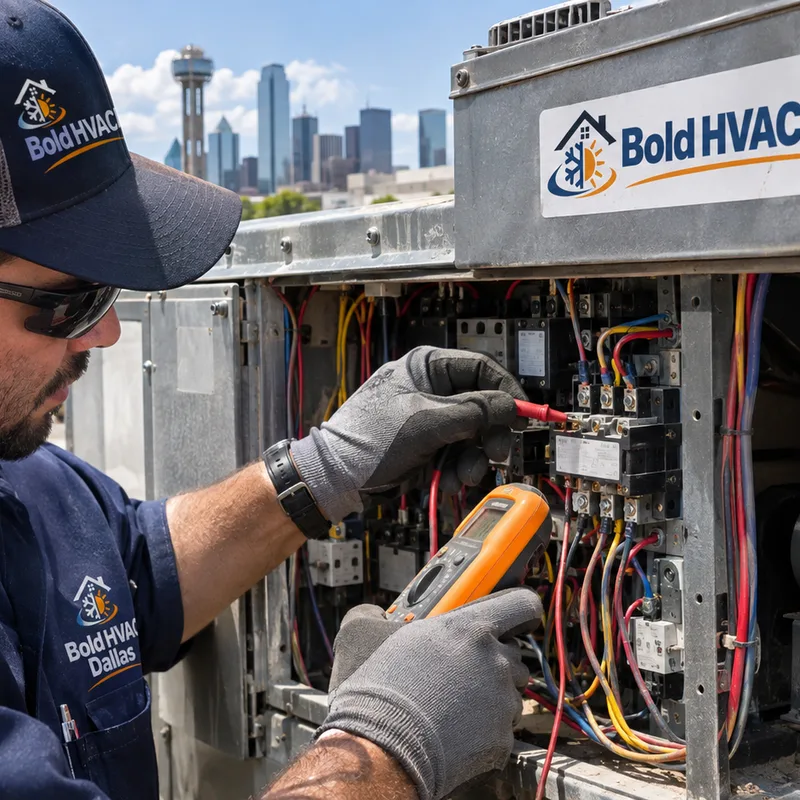
Loose connections, worn belts, clogged drains, and failing capacitors can often be identified during planned service. Addressing them early reduces the chance that a small defect will interrupt business operations.
Clean coils, suitable filters, proper airflow, and responsive controls help reduce hot spots and temperature complaints across occupied areas.
Condition notes help facility managers separate immediate repairs from items that can be monitored or included in a future capital budget.
Restricted airflow and dirty heat-transfer surfaces make equipment work harder. Maintenance restores serviceable conditions and identifies operational problems that need correction.
Condensate lines, pans, and traps need attention during cooling season. Inspection can expose blockages or deterioration before water reaches ceilings, stock, or occupied spaces.
Unit identification, filter sizes, observed conditions, and completed tasks create a useful history for future commercial HVAC service in Dallas.
Downtown Dallas properties may require roof-access coordination, parking arrangements, building-management approval, or work planned around tenant hours. In Deep Ellum, restaurants and entertainment venues can place different demands on cooling and ventilation than a standard office. Design District showrooms and warehouses often have larger open areas, loading activity, or doors that frequently open. Las Colinas offices may involve multiple zones and tenant schedules, while Addison's concentration of restaurants and commercial properties can make kitchen heat and peak occupancy important planning factors.
These conditions affect access, filter loading, inspection priorities, and the best time to perform work. Before service, provide equipment lists if available, roof-access requirements, known comfort complaints, and any restricted work periods. If the property uses a building automation system, note alarm history and recent setpoint changes. Better information allows the technician to reproduce problems and avoid unnecessary disruption.
Local utility service may come from Oncor in much of the Dallas area, while retail electricity providers handle billing plans in the deregulated market. HVAC maintenance cannot change utility rates, but it can identify equipment conditions that cause unnecessary runtime or poor heat transfer.
We discuss property use, operating hours, access, known comfort issues, critical areas, and the types and locations of HVAC equipment.
The scope identifies covered units, planned tasks, suitable service intervals, and any scheduling or documentation requirements.
The technician follows an equipment-appropriate checklist, performs included maintenance, records operating observations, and notes defects that require separate approval.
Safety concerns, active failures, water risks, and issues that threaten operation are separated from routine recommendations and longer-term planning items.
Repeated observations can reveal deteriorating components, recurring drainage trouble, or units that need closer monitoring before peak demand.
Commercial HVAC maintenance in Dallas typically costs about $200 to $600 per unit for a routine visit, while larger equipment, difficult access, extensive cleaning, or multi-unit agreements can change the per-unit price. Small systems with straightforward access are generally at the lower end; large rooftop units and complex controls cost more to inspect and service.
Final pricing depends on equipment type, unit count, condition, filter requirements, roof access, service frequency, and included testing. Repairs, replacement parts, refrigerant leak work, and specialty cleaning are usually separate. Exact cost is confirmed after the equipment and requested scope are reviewed.
Ask for a defined scope rather than relying on a vague tune-up description. The proposal should identify which units are covered, which tasks are included, how findings are reported, and whether filters or other routine materials are part of the agreement. It should also explain how repair recommendations receive authorization.
A useful provider should understand rooftop access, tenant coordination, occupied-space concerns, and the difference between urgent defects and planned work. Ask whether technicians document model and serial information, temperature readings, electrical observations, drain condition, and visible coil condition. For facilities with many units, consistent asset labels make records easier to use.
Service frequency should match the property. Equipment serving long operating hours, kitchens, high-traffic entrances, dusty work areas, or critical rooms may need more attention than a lightly used office. Manufacturer guidance, filter loading, equipment condition, and seasonal demand should inform the schedule. Bold HVAC Dallas can review those factors and prepare a maintenance plan tied to the actual facility.
Get a clear maintenance scope for your commercial equipment, including service priorities, access requirements, and a schedule that fits your operating hours.
Call to ScheduleMany commercial systems should be inspected at least in spring and fall, but the right frequency depends on equipment, operating hours, and site conditions. Dallas cooling demand, heavy occupancy, restaurant use, dusty operations, or quickly loaded filters may justify more frequent checks. Manufacturer instructions and observed equipment condition should guide the final schedule.
Yes, much of the work can usually be coordinated around normal operations, although individual units may need to be shut down during testing or service. Downtown roof access, tenant schedules, secure mechanical rooms, and critical spaces should be discussed beforehand. The technician can phase work across units to limit comfort disruption.
Routine maintenance tasks are included only when they appear in the agreed scope, while repairs and replacement parts are generally priced separately. A sound process documents the defect, explains its operational impact, and obtains authorization before additional work begins. This distinction is especially useful for property managers responsible for several units or tenant spaces.
Commercial rooftop units can be maintained when safe access and the required property authorization are available. Service planning should identify each unit, the space it serves, access procedures, and approved work periods. Clear asset labels are particularly helpful on Dallas office, retail, and mixed-use properties with several similar units.
Provide the property type, operating hours, equipment list if available, access instructions, recent repair history, and specific comfort complaints. Building automation alarms, thermostat changes, unusual sounds, water observations, and rooms with temperature problems are also useful. This information helps the technician focus testing and reproduce intermittent issues.
Refrigerant-side performance can be checked when conditions and the maintenance scope call for it, but refrigerant should not be added without evidence that it is needed. Temperature, pressure, airflow, and equipment specifications must be considered together. If a leak is suspected, diagnosis and repair should be addressed separately rather than treating repeated charging as routine maintenance.
Yes, one facility plan can cover packaged rooftop units, split systems, heat pumps, and related controls, but each equipment type needs its own checklist. The plan should identify every asset and specify applicable tasks. This prevents a generic procedure from overlooking belts, economizers, condensate components, or controls unique to a particular unit.
Tell Bold HVAC Dallas about your facility, equipment, access needs, and operating schedule. We will help define a practical commercial HVAC maintenance scope and identify the next service priorities.