HVAC service in Dallas, Texas

HVAC Dallas Texas

Dependable heating and cooling repair, maintenance, replacement, and installation for Dallas homes and businesses.

✓Residential HVAC service ✓Commercial HVAC service ✓Repair and replacement options
HVAC technician inspecting a residential outdoor air-conditioning unit at a Dallas home on a sunny day

Heating and Cooling Service Built for Dallas

When you need HVAC Dallas Texas service, the first priority is getting an accurate diagnosis. Weak airflow, uneven temperatures, unusual sounds, short cycling, high indoor humidity, and rising utility use can have several causes. A technician should inspect the equipment and identify the fault before recommending a repair or replacement.

Dallas summers put long operating hours on air conditioners and heat pumps. During colder weather, furnaces and heat pumps need to start reliably and distribute heat evenly. Local storms can also leave outdoor equipment exposed to debris, clogged coils, and electrical problems. Regular filter changes, clean coils, open supply registers, and properly sized equipment all affect comfort and system life.

Bold HVAC Dallas handles residential and commercial heating and cooling needs. As an experienced HVAC service team in Dallas, TX, we focus on the equipment, controls, airflow, and building conditions that determine whether a system can do its job. Customers receive a clear explanation of the findings and practical options based on the condition of the system.

Complete system support

Complete Dallas HVAC Services

Air-Conditioning Repair

Diagnostic service for systems that will not start, blow warm air, cycle too often, freeze at the evaporator coil, or struggle to maintain the thermostat setting. Testing may include refrigerant pressures, capacitors, contactors, blower operation, and temperature split.

Heating Repair

Troubleshooting for gas furnaces, electric furnaces, and heat pumps with ignition trouble, cold airflow, frequent shutdowns, or uneven heating. Safety controls, burners, heat exchangers, sequencers, and defrost operation are checked as applicable.

HVAC Maintenance

Seasonal service helps find worn electrical parts, restricted airflow, drainage trouble, and dirty heat-transfer surfaces before demand peaks. Maintenance is also a good time to review filter type, thermostat operation, and condensate disposal.

System Replacement

Replacement planning accounts for equipment condition, repair history, efficiency, duct capacity, and the building's cooling and heating load. A proper recommendation should be based on load calculations rather than simply matching the old unit's nominal size.

Indoor Air and Humidity Control

Filtration, ventilation, duct sealing, and humidity management can address comfort complaints that equipment replacement alone may not solve. The right approach depends on measured airflow and the source of the indoor air concern.

Commercial HVAC

Service for light-commercial split systems, packaged rooftop units, thermostats, controls, and related airflow problems. Scheduling and repair planning should consider operating hours, tenant comfort, equipment access, and business continuity.

System-level testing

What a Thorough HVAC Diagnosis Includes

A good Dallas HVAC visit starts with the complaint and follows the evidence. The technician checks the thermostat call, electrical disconnects, breakers, safeties, motors, and accessible wiring. Cooling diagnostics may include condenser condition, compressor amperage, refrigerant readings, condensate drainage, and the temperature difference between return and supply air. Heating checks depend on the equipment and may cover ignition, flame sensing, combustion components, electric heat strips, or heat-pump reversing and defrost controls.

Airflow deserves equal attention. A clean outdoor unit cannot correct an undersized return, a severely loaded filter, a failing blower, or damaged ductwork. In neighborhoods with older housing, such as Oak Cliff and East Dallas, previous additions or equipment changes may have left ducts and returns mismatched to the current floor plan. In Uptown, equipment may be located in tighter mechanical closets or shared-access buildings, which makes access and coordination part of the service plan. Downtown commercial properties can involve rooftop access and scheduled work around occupied spaces.

After testing, the technician should separate immediate faults from optional improvements. That distinction helps customers decide whether to repair, plan a later replacement, or address an airflow problem first.
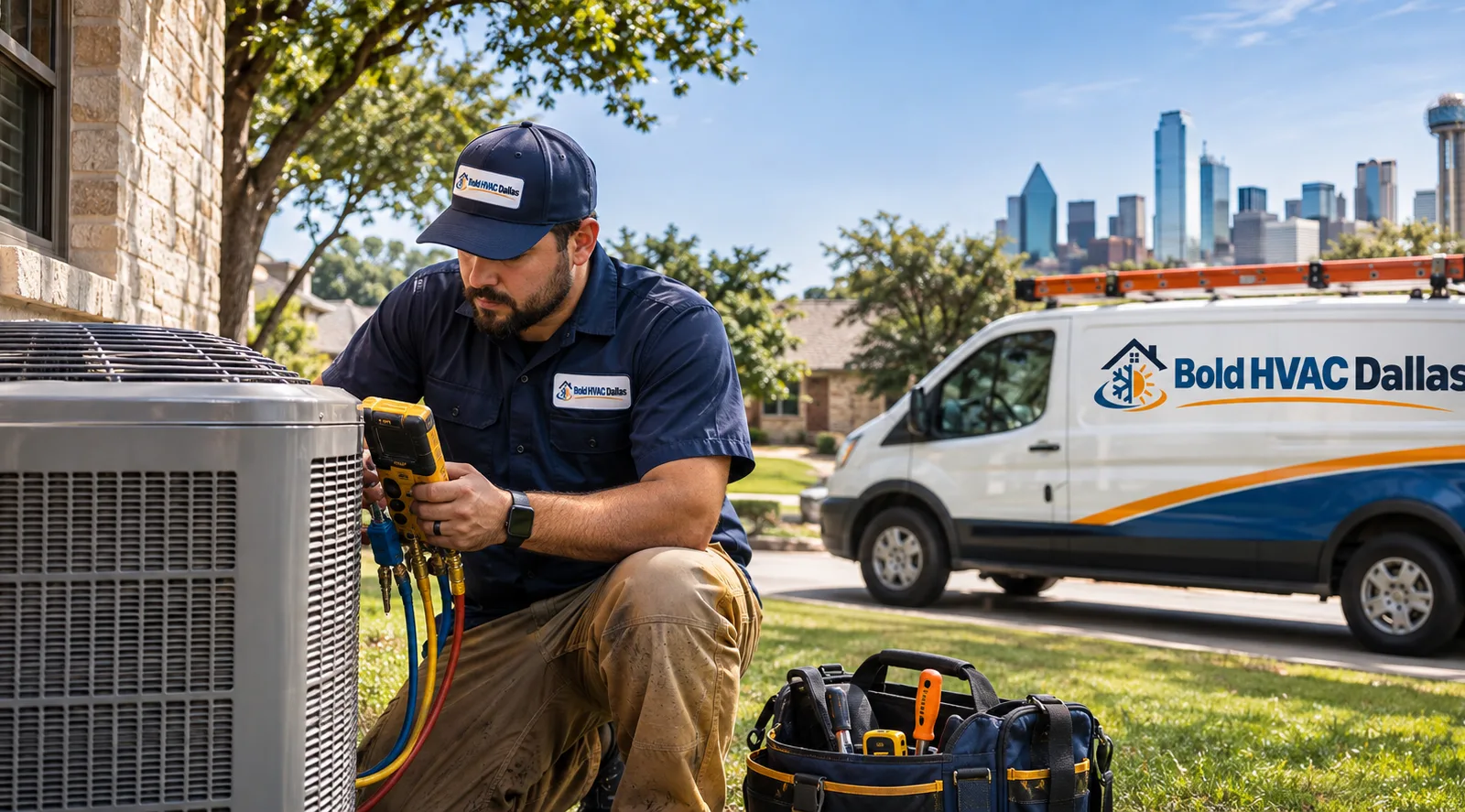
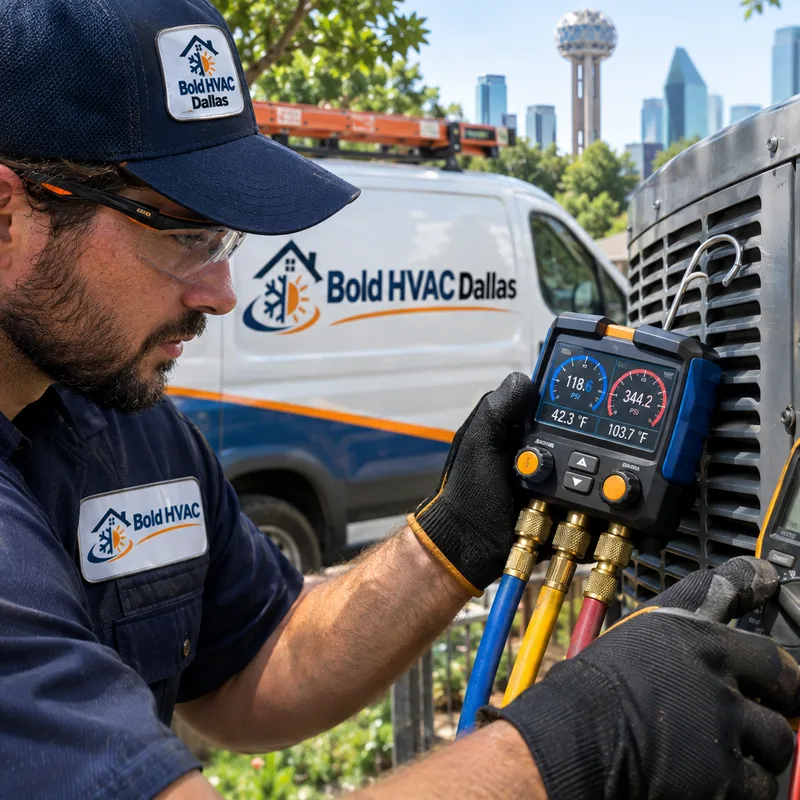
HVAC technician using digital gauges and an electrical meter while diagnosing a central air-conditioning system
Measured testing helps distinguish an equipment fault from an airflow or control problem.
Clear service decisions

Choosing the Best HVAC in Dallas for Your Property

The best HVAC Dallas provider for a particular job is the one that can explain the diagnosis, define the scope, and match the recommendation to the building. Ask what was tested, which readings support the finding, whether the quoted work includes labor and parts, and what conditions could change the price. For replacement work, ask how equipment size was determined and whether the existing electrical service, drain, refrigerant lines, thermostat, and duct system are suitable.

Efficiency ratings also need context. Central air conditioners use SEER2, while heat pumps include SEER2 and HSPF2 ratings. Higher-rated equipment may help reduce energy use, but installation quality and duct performance remain important. An oversized system can cool quickly while providing poor moisture removal, and an undersized or restricted system may run continuously during heavy demand. Manual J load calculations estimate heating and cooling loads, Manual S supports equipment selection, and Manual D applies to duct design.

Dallas is generally within the Oncor electric delivery territory, while customers may buy electricity from different retail providers. Equipment efficiency can affect operating cost, but rate plans vary, so projected savings should not be treated as guaranteed. For gas-heating work, fuel type and the existing venting arrangement must be verified at the property.

Check Availability
From symptoms to verification

How Dallas TX HVAC Service Works

Check Availability
01

Discuss the Symptoms

Share when the problem began, which rooms are affected, and whether the equipment starts, stops, leaks, freezes, trips a breaker, or produces unusual odors or sounds. Recent thermostat, filter, or construction changes can also help narrow the search.

02

Inspect and Test

The technician evaluates the relevant electrical, mechanical, refrigeration, drainage, control, and airflow components. Testing is based on the system type and the reported problem rather than a one-size-fits-all checklist.

03

Review the Findings

You receive an explanation of the failed part or contributing condition, along with repair or replacement options when more than one reasonable path exists. The scope should identify what is included before authorized work begins.

04

Complete and Verify the Work

After the approved work, the system is operated and checked. Verification may include temperature readings, thermostat response, drainage, motor operation, refrigerant performance, or heating sequence, depending on the repair.

Practical equipment planning

Repair, Maintain, or Replace?

Repair is often reasonable when the failed component is identifiable, the rest of the system is in serviceable condition, and the cost makes sense relative to the equipment's age and history. Common serviceable faults include failed capacitors, contactors, motors, drain components, thermostats, igniters, and flame sensors. Refrigerant loss requires more than adding refrigerant. The leak should be investigated, and the refrigerant type matters when discussing repair options.

Replacement becomes more practical when major components have failed, repair needs are recurring, parts are difficult to obtain, or comfort remains poor because the system is badly matched to the building. Older equipment may use R-22 refrigerant, which is no longer produced or imported in the United States. That does not automatically require replacement, but refrigerant availability and repair cost should be part of the decision.

Maintenance is most useful before the system is under sustained seasonal demand. It does not prevent every failure, but it can uncover weak electrical parts, clogged drains, dirty coils, and airflow restrictions. For HVAC in Dallas, a cooling check before the hottest conditions and a heating check before regular winter use provide time to address problems without making a rushed decision.

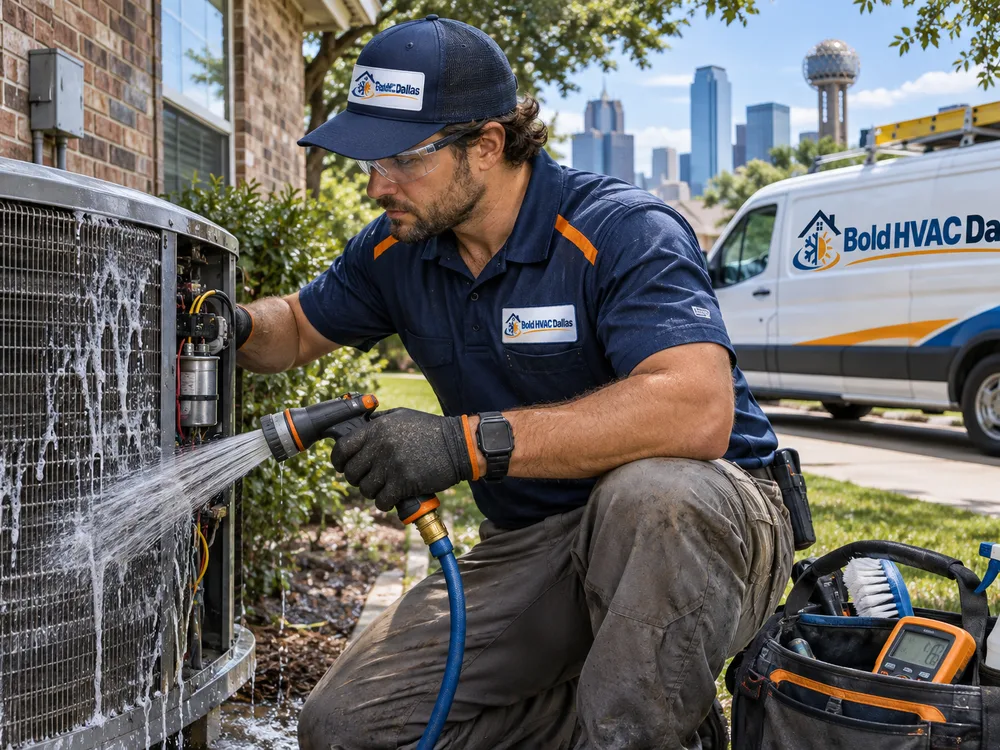
Technician cleaning an outdoor condenser coil and checking components during preventive HVAC maintenance at a Dallas property
Preventive service addresses cleaning, drainage, electrical condition, and system operation.
Pricing guidance

How Much Does HVAC Service Cost in Dallas?

A standard HVAC repair in Dallas typically ranges from $150 to $1,200, while major component work can cost $1,500 to $4,000 or more. Full central-system replacement commonly ranges from about $7,000 to $16,000, depending on capacity, efficiency, and installation scope.

Final price changes with equipment type, refrigerant, part availability, access, electrical needs, duct modifications, permits, and whether work is urgent. These are general, nonbinding ranges rather than a quote. The exact cost is confirmed after an on-site diagnosis or replacement consultation.

Check Availability

Get the cause of your heating or cooling problem identified and review a clear scope before work begins.

Call to Schedule
Helpful answers

Dallas HVAC Questions

How quickly can HVAC repair in Dallas be scheduled?+

Scheduling depends on current demand, the type of failure, equipment access, and parts availability. Demand often rises sharply during extended hot weather in Dallas, so describe whether the system is completely off, leaking water, tripping electrical protection, or serving an occupied commercial space when arranging service.

Should I repair or replace an older Dallas HVAC system?+

Repair is usually worth considering when the fault is limited, parts are available, and the system otherwise heats or cools the property adequately. Replacement deserves stronger consideration when major failures repeat, the compressor or heat exchanger is compromised, the system uses R-22, or poor sizing and duct restrictions have caused long-term comfort problems.

How often should HVAC equipment be maintained in Dallas, TX?+

Cooling and heating equipment should generally be inspected before its primary season of use, with frequency adjusted for the equipment, property, filter loading, and manufacturer guidance. Dallas cooling systems can operate for long stretches in hot weather, so clean heat-transfer surfaces, free condensate drainage, and correct airflow are especially important.

Why is my air conditioner running but not cooling the house?+

An air conditioner can run without cooling properly because of restricted airflow, a dirty condenser, a failed compressor component, low refrigerant caused by a leak, duct loss, or incorrect thermostat operation. A technician should measure temperatures and test the relevant components before recommending refrigerant or replacing parts.

What should a Dallas HVAC replacement quote include?+

A replacement quote should identify the equipment, capacity, efficiency ratings, labor, controls, permit responsibilities, disposal, warranty terms, and any planned electrical, drain, refrigerant-line, or duct work. Dallas properties vary widely, so equipment size should be based on the building load and installation conditions rather than square footage alone.

Can one HVAC system fix hot and cold rooms?+

A new system may not fix uneven rooms if the main cause is duct design, air leakage, inadequate returns, closed dampers, solar exposure, or changes to the floor plan. Older Dallas homes and remodeled properties can have additions that were never properly incorporated into the original air distribution system, so airflow should be evaluated first.

Do you service both homes and commercial properties?+

Bold HVAC Dallas provides heating and cooling service for residential and commercial properties. Commercial planning may require rooftop access, coordination with property management, work around operating hours, and evaluation of packaged equipment or multiple comfort zones.

Plan the next step

Need Reliable Heating or Cooling Service?

Tell Bold HVAC Dallas what the system is doing, which areas are affected, and how urgent the problem is. We will help you take the next practical step toward dependable indoor comfort.