AC Not Cooling
Warm supply air can point to thermostat settings, restricted airflow, a failed electrical part, coil trouble, or a refrigerant issue. Testing identifies the cause before parts are recommended.
Serving Dallas, Texas & surrounding areas
24/7 Emergency Response
Practical diagnosis, careful repairs, and preventive maintenance for dependable cooling through North Texas heat.

When cooling weakens during a hot Dallas afternoon, you need a clear diagnosis rather than a quick guess. Bold HVAC Dallas provides ac service in dallas for systems that will not start, run constantly, cool unevenly, make unusual sounds, or send warm air through the vents. Service also includes seasonal maintenance intended to catch worn parts, restricted airflow, and drainage problems before they interrupt cooling.
Our technicians evaluate the system as a whole. That means checking the thermostat, electrical components, indoor airflow, condensate drainage, refrigerant circuit, and outdoor unit as the symptoms require. Our hvac service experts throughout Dallas explain what was found, which work is recommended, and whether a repair is reasonable for the unit's condition. You receive a practical plan before work moves forward.
Dallas heat places long operating demands on residential air conditioners. Cottonwood, grass clippings, dust, and other debris can also restrict an outdoor coil, while a clogged filter can reduce airflow across the indoor coil. Timely service helps the equipment cool more consistently without asking damaged or dirty components to keep carrying the load.
Warm supply air can point to thermostat settings, restricted airflow, a failed electrical part, coil trouble, or a refrigerant issue. Testing identifies the cause before parts are recommended.
A dirty filter, blocked return, blower problem, duct restriction, or frozen evaporator coil can reduce airflow. The technician checks both equipment operation and the air path.
The fault may involve the thermostat, disconnect, breaker, capacitor, contactor, safety switch, or another control. Electrical testing is safer and more useful than repeatedly resetting the system.
Frequent starts and stops or unusually long cycles may come from airflow trouble, incorrect controls, overheating components, refrigerant problems, or equipment sizing concerns.
A blocked condensate drain, damaged drain pan, failed pump, or frozen coil can cause water around an air handler. Prompt attention can limit moisture damage.
Grinding, buzzing, rattling, and persistent musty odors deserve inspection. These symptoms may indicate loose parts, electrical faults, motor wear, debris, or drainage concerns.
A useful service visit begins with the symptoms you have noticed and when they occur. The technician then confirms thermostat operation and checks the system in cooling mode. Depending on the issue, testing may include temperature readings at the return and supply, static-pressure or airflow checks, capacitor readings in microfarads, motor amperage, voltage, contactor condition, and condensate drain operation.
Refrigerant is not a maintenance fluid that should routinely need topping off. If readings suggest a low charge, the next step is to investigate why. Refrigerant work also depends on the refrigerant type and the equipment's service requirements. Adding refrigerant without addressing a confirmed leak can leave the underlying fault unresolved.
For preventive air conditioning service in Dallas, attention commonly goes to the filter, accessible coils, electrical connections, blower operation, drain line, insulation, and outdoor unit. Any cleaning or adjustment should match the equipment and its condition. Bold HVAC Dallas will distinguish immediate repair needs from items that can be monitored or planned.
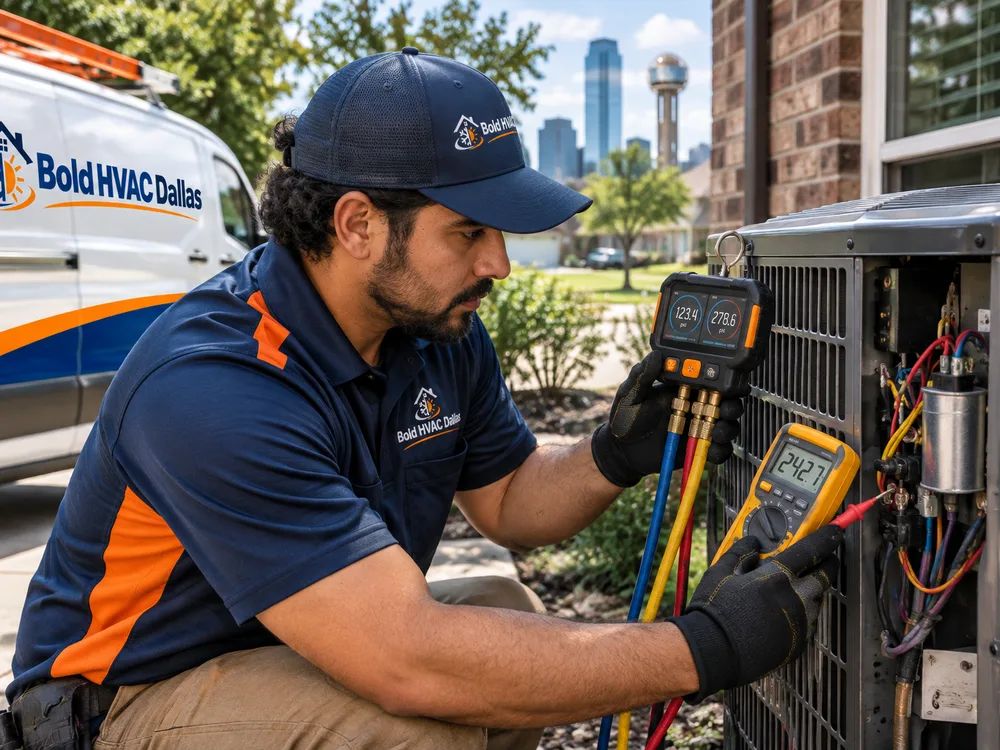
Share what the system is doing, when the issue began, and whether any breaker, filter, thermostat, noise, odor, or water changes have been noticed.
The technician reproduces the problem when possible, checks relevant components, and takes operating measurements. Testing is tailored to the symptom rather than limited to a visual check.
You receive an explanation of the failed or worn component, the recommended work, and factors that may affect the repair. If age or condition raises a larger concern, that is discussed without treating replacement as the automatic answer.
Approved repairs or maintenance are completed with attention to manufacturer requirements and safe operating practices. Any change in scope is discussed before additional work proceeds.
The system is restarted and checked for normal operation. The technician confirms the original symptom has been addressed and notes any condition that should be watched.
Extended North Texas heat can keep an air conditioner running for long periods, so small airflow or electrical problems can become obvious quickly. A weak capacitor may struggle during high outdoor temperatures. A clogged filter or dirty coil can reduce heat transfer and contribute to coil icing, longer cycles, and poor comfort.
Housing conditions also vary across the city. Older homes in Oak Cliff may have additions, limited return-air pathways, or equipment installed after the original construction, all of which matter when diagnosing uneven rooms. Lake Highlands includes many established houses where duct condition and attic heat can affect comfort. In newer Uptown apartments and condominiums, equipment access and building management rules may shape how service is scheduled. These details do not replace testing, but they help the technician ask better questions.
Oncor maintains the electric delivery system across much of Dallas, but an air conditioner can still have an equipment fault even when other lights and appliances work. If the home has a broader outage or damaged utility equipment, the utility issue must be addressed first. A tripped cooling breaker that will not reset should remain off until the cause is inspected.

A Dallas AC diagnostic visit typically costs about $80 to $200, while common repairs may run roughly $150 to $1,200 or more. Simple drain clearing or a basic electrical part is generally at the lower end; motors, coils, refrigerant leaks, compressor problems, and difficult access cost more.
Final price depends on the failed component, equipment type, refrigerant, parts availability, access, and whether after-hours scheduling is needed. Maintenance is usually priced separately from repair. The exact cost is confirmed after the technician inspects and tests the system.
A service diagnosis should answer two questions: what is wrong now, and what choice makes sense for this equipment. Repair is often reasonable when the fault is isolated, the needed part is available, and the rest of the system is in serviceable condition. Age alone does not identify the failed component.
Maintenance is appropriate for an operating system that needs inspection, cleaning, drainage checks, and performance testing. It cannot reverse compressor wear, seal a refrigerant leak, or restore a burned motor. A technician should say plainly when a maintenance task will not solve the reported problem.
Replacement may deserve consideration when a major component has failed, repair parts are difficult to source, refrigerant-related work is extensive, or the system has recurring faults. The decision should account for both indoor and outdoor equipment, since matched system performance matters. If replacement is presented as an option, ask for the repair alternative, equipment condition, and scope in writing so you can compare the choices on the same facts.
If your air conditioner is losing ground in the heat, arrange an inspection before continued operation turns a manageable fault into a larger repair.
Call to ScheduleMany common AC faults can be diagnosed during one service visit, although intermittent failures, concealed duct issues, and refrigerant leaks may require more testing. Dallas heat can change operating pressures and electrical behavior, so diagnosis is most useful when the technician can run the system under conditions similar to those that trigger the problem.
Turn the system off if you hear grinding, see electrical arcing, smell burning, or find water spreading near the indoor unit. Water may come from a blocked condensate drain or frozen coil, while harsh mechanical or electrical symptoms can worsen with continued operation. Leave a breaker off if it trips again after one reset.
Annual cooling maintenance before sustained hot weather is a practical baseline for many Dallas homes, while filters may need attention more often based on filter type, pets, dust, and system use. The equipment manufacturer's instructions should guide the final schedule. A service visit may also be needed between tune-ups when comfort or operating sounds change.
An AC that runs without cooling may have restricted airflow, a dirty coil, a failed outdoor component, a frozen evaporator coil, or a refrigerant-circuit fault. Check that the thermostat is set to cooling and the filter is not visibly clogged, but avoid opening equipment panels. Proper testing is needed to separate airflow trouble from electrical or refrigerant problems.
Yes, equipment using an older refrigerant can still be inspected and may be repairable, but refrigerant availability, leak location, component condition, and applicable handling rules affect the options. The technician should identify the refrigerant from the equipment data plate and discuss whether repair is practical before refrigerant work begins.
Ask which test confirmed the failure, what part and labor are included, whether the price may change, and how the repair affects the rest of the system. For Dallas condominiums or managed properties, also confirm access requirements and whether management approval is needed for outdoor, rooftop, or shared mechanical areas.
Tell Bold HVAC Dallas what your system is doing. A technician can inspect the equipment, explain the findings, and outline the work needed to restore dependable cooling.